


“How much wood, could a whoodchuck chuck, if a woodchuck could chuck wood?” – This is one of my core gaming memories. Playing Monkey Island 2 with my brother when were just kids on our Amiga in the 1990’s.
We never actually got to the bottom of the conversation in-game, we were far too young to understand what was going on. But Monkey Island cemented itself as an iconic series, there and then.
Ever since then, we’ve loosely followed the series, playing bits here and there, but never fully committed to one. But it feels like now might well be the time.
Before we dive into Return to Monkey Island it seems best to do a bit of history and understand the series, where it comes from and where it’s been. So grab a grog (or beer), and let’s take a look at the history of Monkey Island.
Monkey Island
There a time when game design didn’t worry about frame rates, ray tracing, or open-world fatigue. It worried about verbs. Specifically, verbs like Look at, Pick up, and Use.
At the absolute pinnacle of this era stood LucasArts (then Lucasfilm Games), and leading the charge was a clumsy, wannabe pirate named Guybrush Threepwood.
The Monkey Island series didn’t just define the point-and-click adventure genre; it weaponised comedy, subverted storytelling tropes, and created a legacy that still casts a massive shadow over modern narrative design.
The Golden Age of SCUMM (1990–1991)
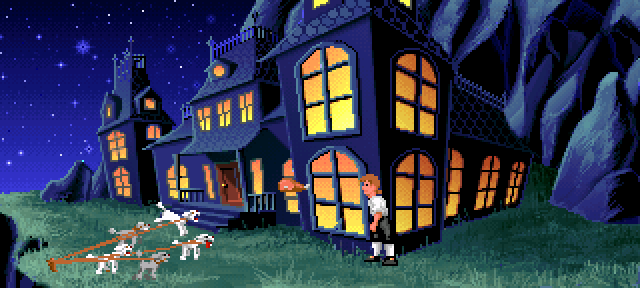
In 1990, Ron Gilbert, Tim Schafer, and Dave Grossman changed adventure games forever with The Secret of Monkey Island. Powered by the SCUMM engine (Script Creation Utility for Maniac Mansion), it discarded the frustrating, sudden-death mechanics of contemporaries like Sierra’s King’s Quest. Instead, it focused on exploration, brilliant puzzle design, and razor-sharp wit.
It introduced us to Mêlée Island, the terrifying ghost pirate LeChuck, the fiercely independent Governor Elaine Marley, and Insult Sword Fighting—a brilliant mechanic where a sharp tongue was explicitly deadlier than a sharp blade.
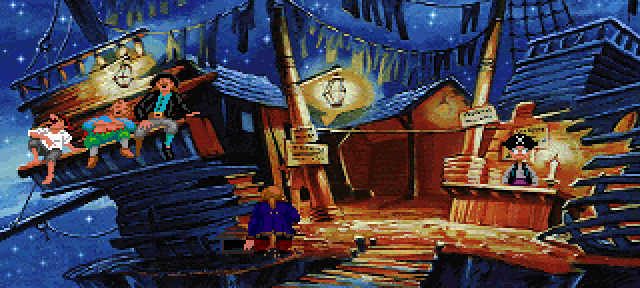
Just a year later, Monkey Island 2: LeChuck’s Revenge (1991) pushed the limits of pixel art and introduced the iMUSE system, which dynamically synchronised the musical score with the player’s on-screen actions. It also delivered one of the most bizarre, heavily debated surrealist cliffhangers in gaming history. An ending that wouldn’t be truly resolved for thirty years.
Voice Acting and Artistic Evolution (1997–2000)
After a six-year hiatus and the departure of Gilbert, the series transitioned into the era of multimedia PCs.
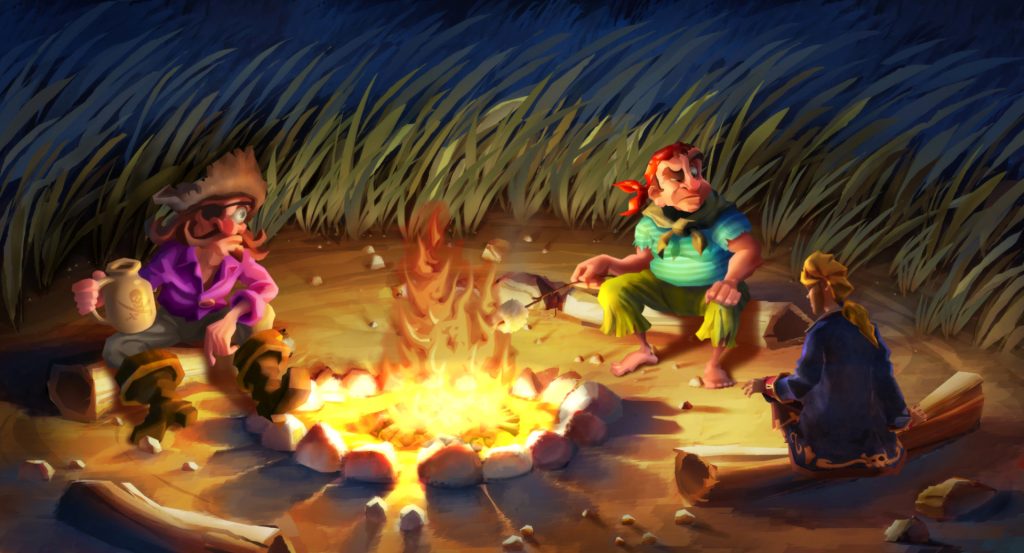
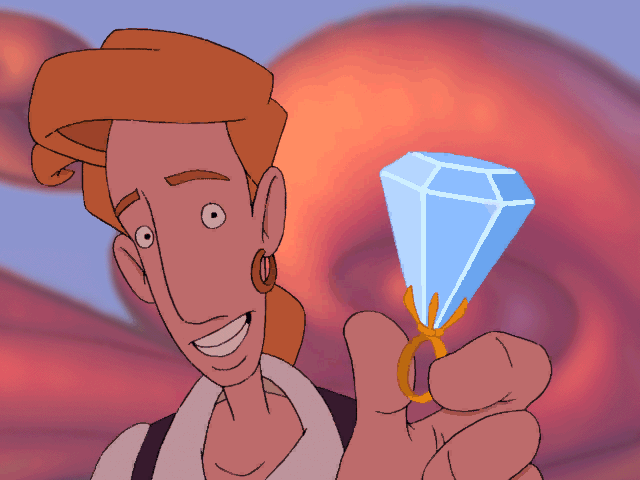
The Curse of Monkey Island (1997) swapped the classic pixel art for a gorgeous, hand-drawn cel-animation aesthetic that holds up beautifully today. Crucially, it gave Guybrush a voice. Dominic Armato’s pitch-perfect voice acting defined the character from that moment onward, perfectly balancing earnestness with comedic cowardice.
The turn of the millennium brought Escape from Monkey Island (2000). Utilizing the 3D GrimE engine previously seen in Grim Fandango, it traded the mouse cursor for direct tank controls. While it featured fantastic writing and tackled the corporate commercialisation of piracy, the clunky 3D navigation and the divisive “Monkey Kombat” mechanic made it a black sheep for many purists.
The Telltale Era and Special Editions (2009–2010)
By the late 2000s, point-and-click adventures were widely declared a “dead art.” LucasArts partnered with Telltale Games—a studio founded by LucasArts veterans, to prove the critics wrong.
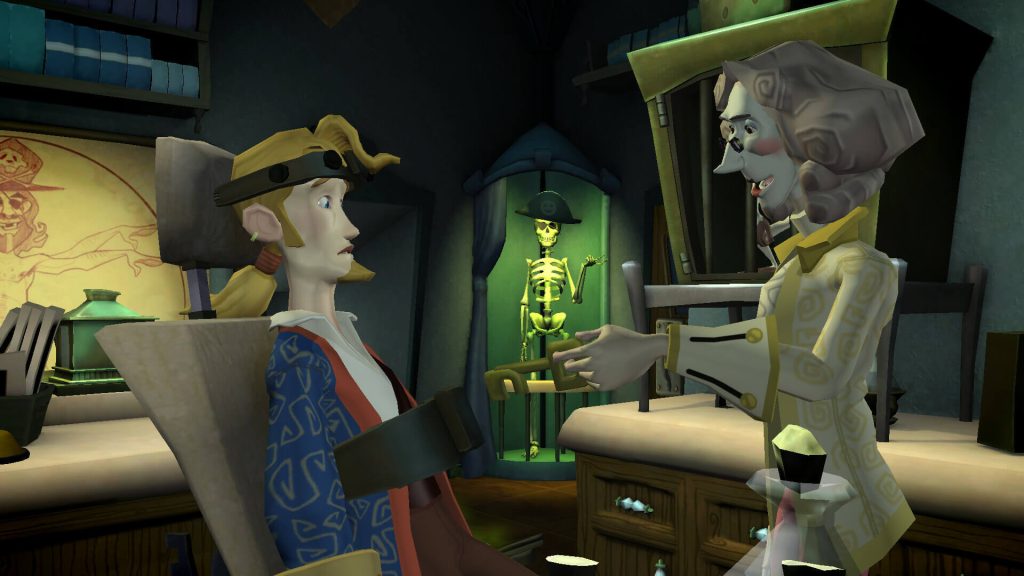
Tales from Monkey Island (2009) was released as a five-part episodic series. It captured the heart of the original games, introducing a great new dynamic by infecting Guybrush’s hand with the voodoo pox of LeChuck.
Simultaneously, LucasArts remastered the first two entries with Special Editions, featuring fully voiced lines, re-recorded orchestral scores, and a hotkey allowing players to instantly swap between high-definition art and the original 1990s pixels.
The Grand Return (2022)
For over a decade, the ship sat in port. Then, out of nowhere, Ron Gilbert announced he was returning to the helm alongside co-writer Dave Grossman.
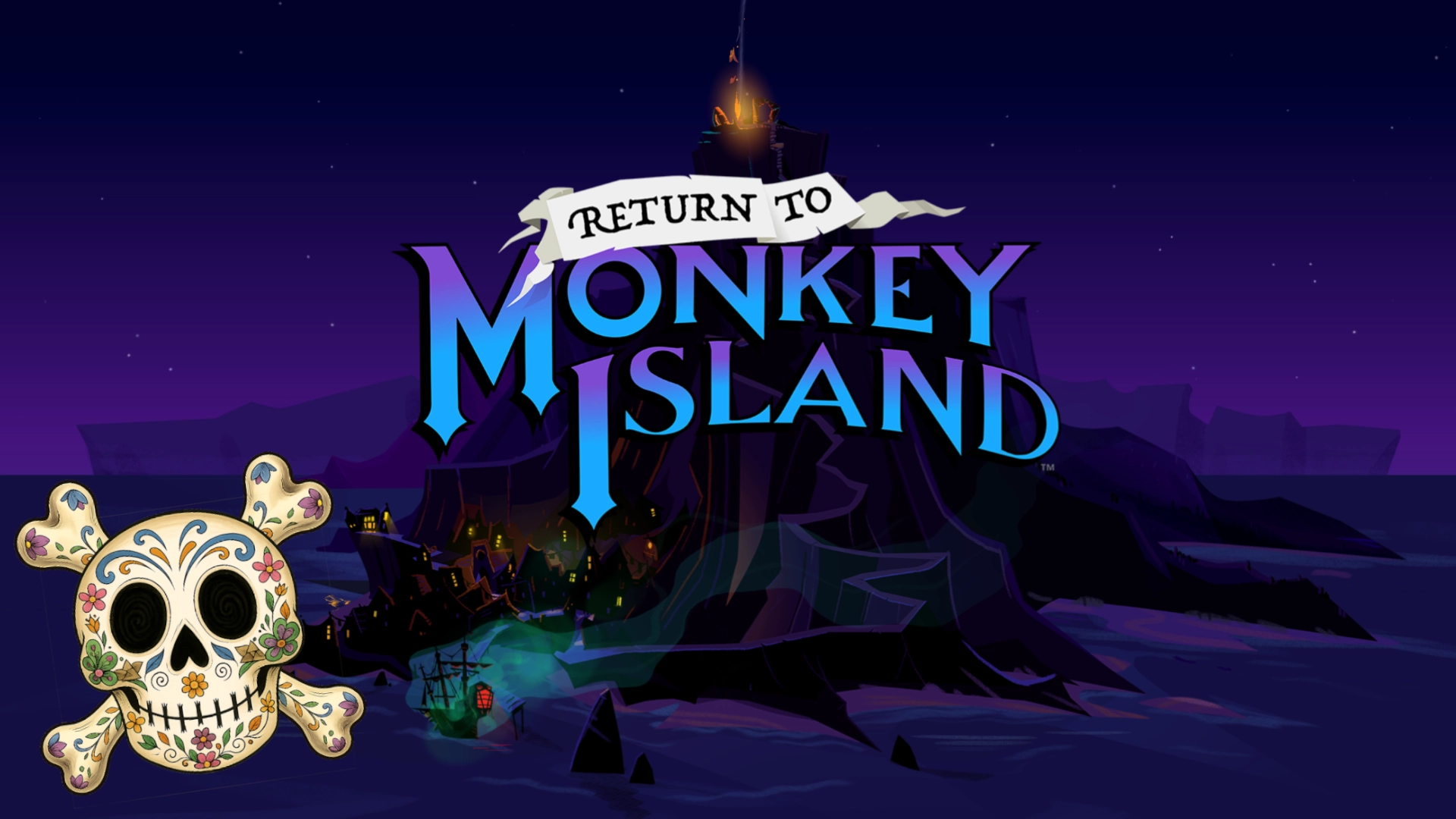
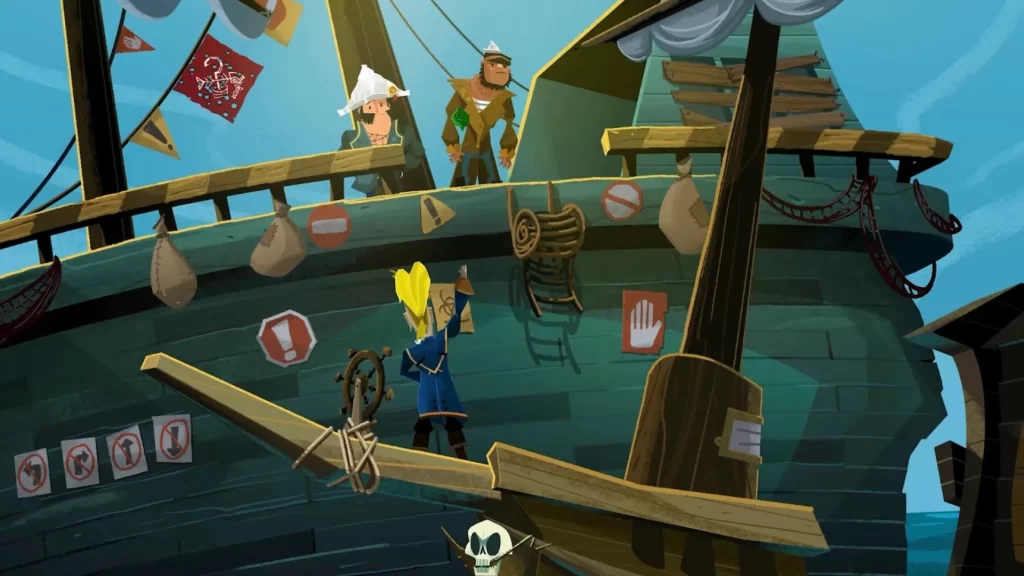
Return to Monkey Island (2022) served as a direct sequel to Monkey Island 2, finally addressing that infamous 1991 ending while acknowledging everything that came after. Its stylised, patchwork aesthetic by Rex Crowle initially divided fans online, but upon release, the game was widely praised.
It was a metadata-heavy, deeply introspective look at ageing, nostalgia, and what it means to chase a legendary “Secret” that might just be a myth after all.
The Monkey Island franchise proved that interactive storytelling didn’t need to rely on twitch reflexes to be thrilling. Through brilliant puzzle logic, unforgettable characters, and a willingness to never take itself too seriously, it remains the gold standard for how to write a video game.
Beyond the core series
Monkey Island has been a significant reference point and cultural touchstone, for decades. With nods to the silliness in many games over the years. Beyond that, though, the big tilt towards the legendary series, was actually in Sea of Thieves.
Presented as one of the games Tall Tales. There’s a whole adventure, built into Sea of Thieves that features all the core elements of Monkey Island. Puzzles, characters, locations. It’s one we actually need to finish, but to me, it put Monkey Island back on the map in a big way.
Now, with the well-received Return to Monkey Island and the Tall Tale in Sea of Thieves, the legendary pirate series has had new life breathed into it and eyes from a new audience. What that means long-term, we don’t know. But it’s great to be talking about it and not sounding like an old man talking about ancient history.
