









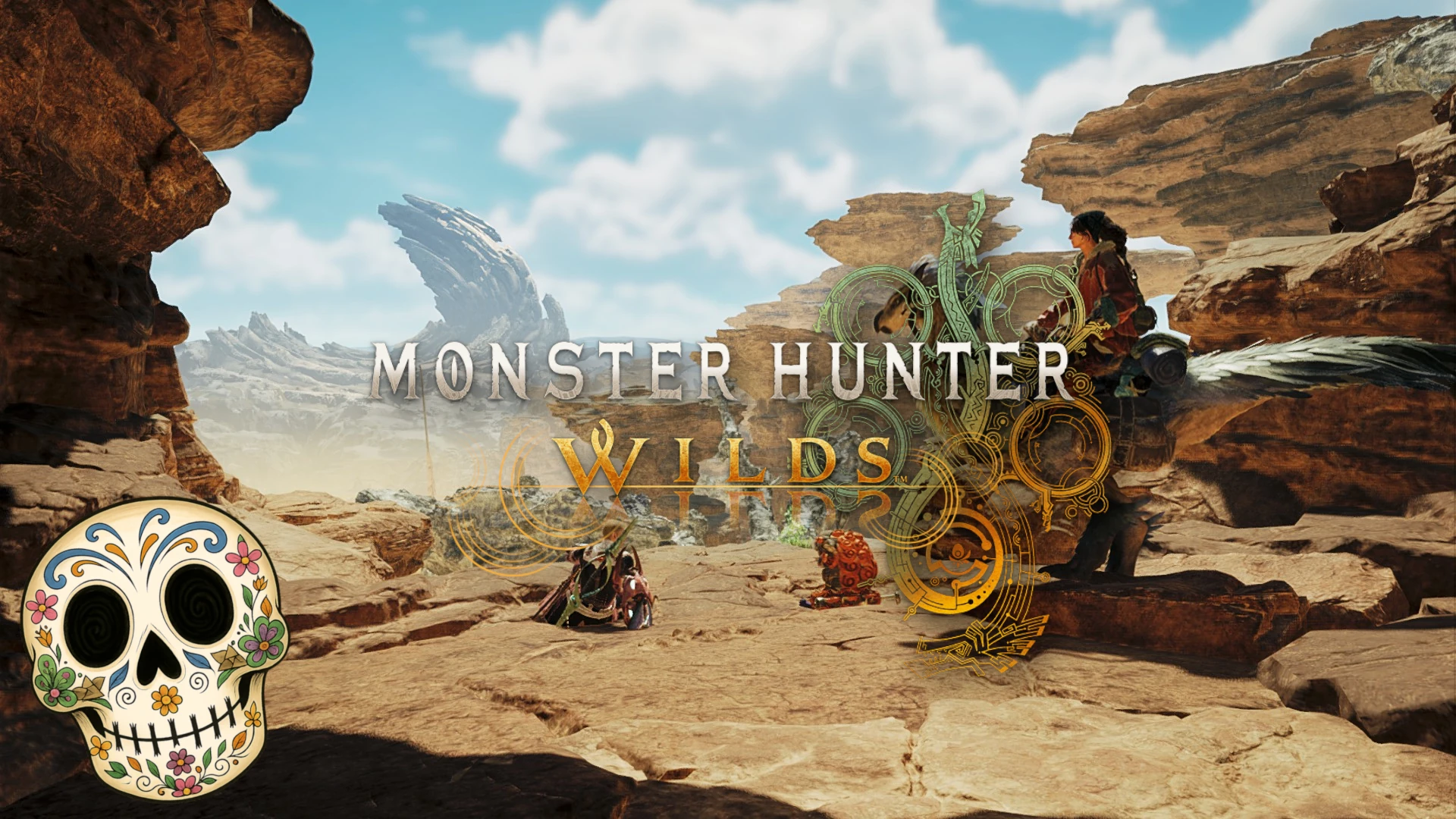
We did a lengthy review of Monster Hunter Wilds last year at the old site. A game that took up much of our gaming time in 2025.
Having gone back to it as a part of our testing of the Steam Controller, it feels appropriate to get the review up over here, but also examine how much the game has changed since launch.
With that said, it’s taken some time to re-visit the game, remember the good and the not so good. But also, looking at performance when the PC has been upgraded, the game has been polished, and the player count has dwindled during the waiting period for a new expansion.
So, here’s the old review, but new, for Dying Art Media.
Monster Hunter Wilds
When Capcom launched Monster Hunter Wilds in early 2025, it faced a monumental task: bridge the cinematic, immersive scale of Monster Hunter World with the blistering speed and quality-of-life advancements of Monster Hunter Rise.
Following over a year of intensive support, title updates, and community-driven patches, we can confidently say that Wilds is not just the culmination of everything that came before it, it is the absolute apex of the series.
For veterans and newcomers pulling up a stool at the canteen in 2026, the Forbidden Lands have never been more inviting, nor more brutal.
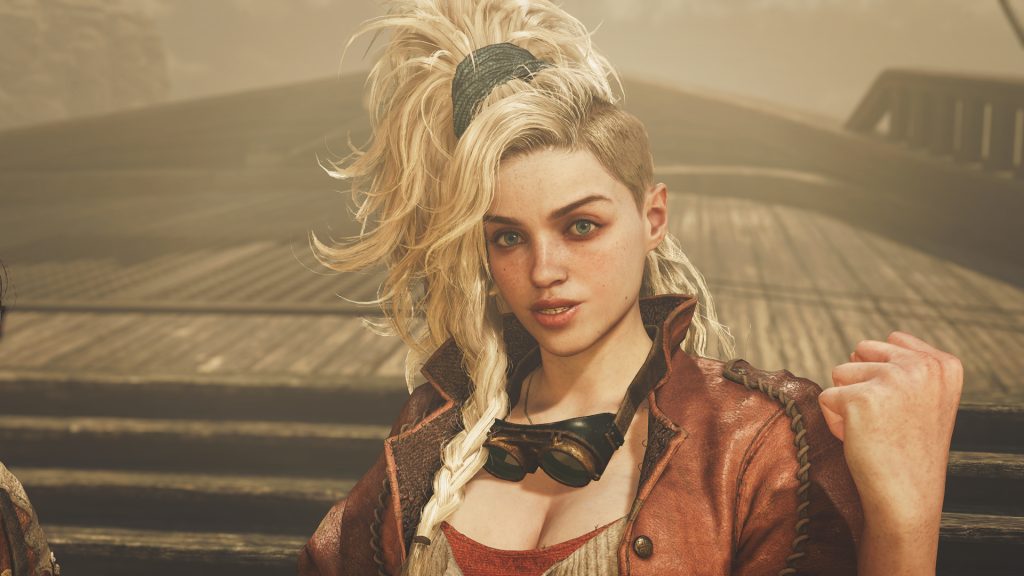
A Living, Breathing World
From the moment you step into the Windward Plains or the Scarlet Forest, Monster Hunter Wilds establishes itself as a far more action-oriented experience than its predecessors.
The series’ traditional, rigid mission structure takes a back seat to a beautifully seamless open world. You no longer need to constantly retreat to a main hub between hunts; you can simply stay out on a hunting binge, clear out an entire environment, set up a pop-up camp, and roast a well-done steak on your portable BBQ.
Your meals and temporary buffs persist over time rather than perishing the moment a single monster falls.
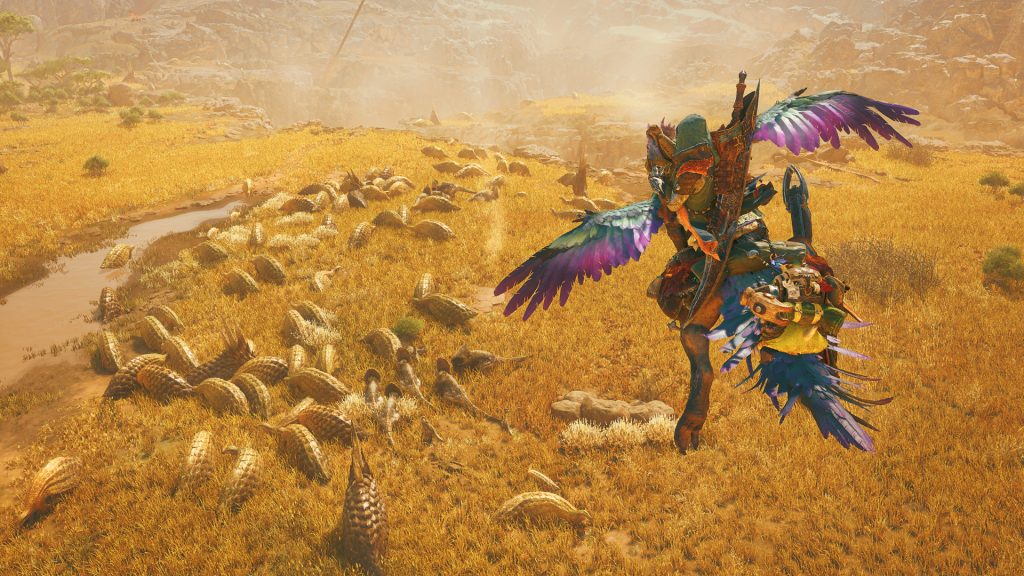
The ecosystem feels incredibly dense and alive. Herbivorous herds migrate across changing weather fronts, territorial pack hunters dynamically clash, and monsters actively utilize dynamic environmental hazards.
Utilizing your new Hook Slinger to drop boulders onto a target or snatch slinger ammo from afar keeps you entirely immersed in the environment.
“Wild” is such a perfect term for the game. You feel like you’re part of a more active, wild world and the entire series is better for it.
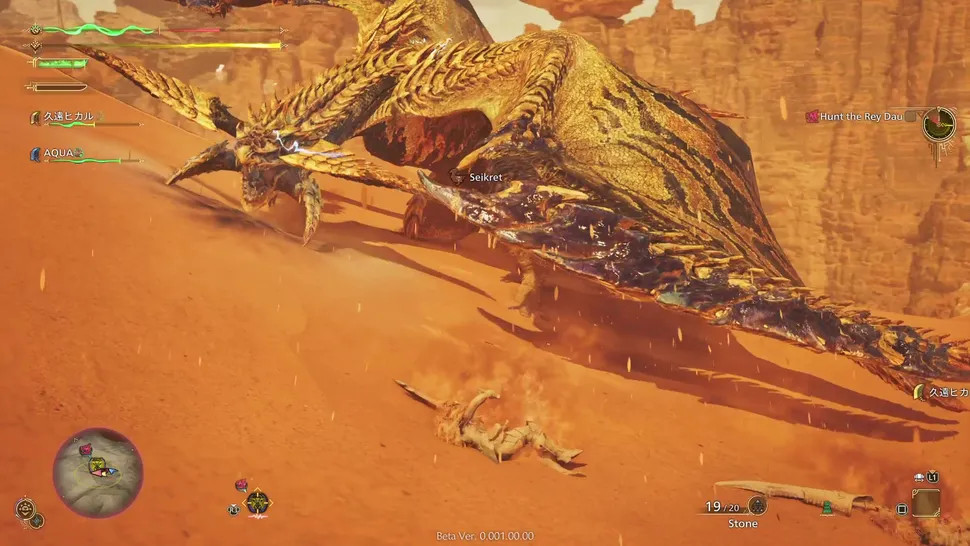
The Seikret and Dual Weapons
While we miss the Palamutes and Wirebugs from Rise, their mechanical efficiencies are brilliantly preserved through the Seikret—your bipedal, feathered mount. The Seikret allows you to sprint, navigate vertical geometry, sharpen your weapon, and chug healing potions entirely on the move.
But the Seikret’s true “what the fuck?!” moment of pure genius is its weapon holster. For the first time in series history, you can bring two weapons out into the field. This feature fundamentally shifts combat strategy.
As an Insect Glaive enthusiast, branching out used to feel like a chore. In Wilds, you can seamlessly transition from a heavy-hitting Great Sword to shatter a monster’s posture, then mount your Seikret, swap to a Light Bowgun or status-focused weapon, and pick them apart from a distance.
With 14 classic weapons all receiving refined movesets and a highly precise new Focus Mode (which allows you to target glowing “wounds” inflicted on monster parts) combat feels tighter and more expressive than ever.
Monster Hunter Wilds turned me from an Insect Glaive main to a Sword and Shield fan-boy. Now I can have both at the same time. Although I’ve been workign on using the bow, so tend to keep that as a spare ranged-option on my Seikret. The flexibility and the lean to 2being out on the hunt” for a preriod of time, just make this feel very natural.
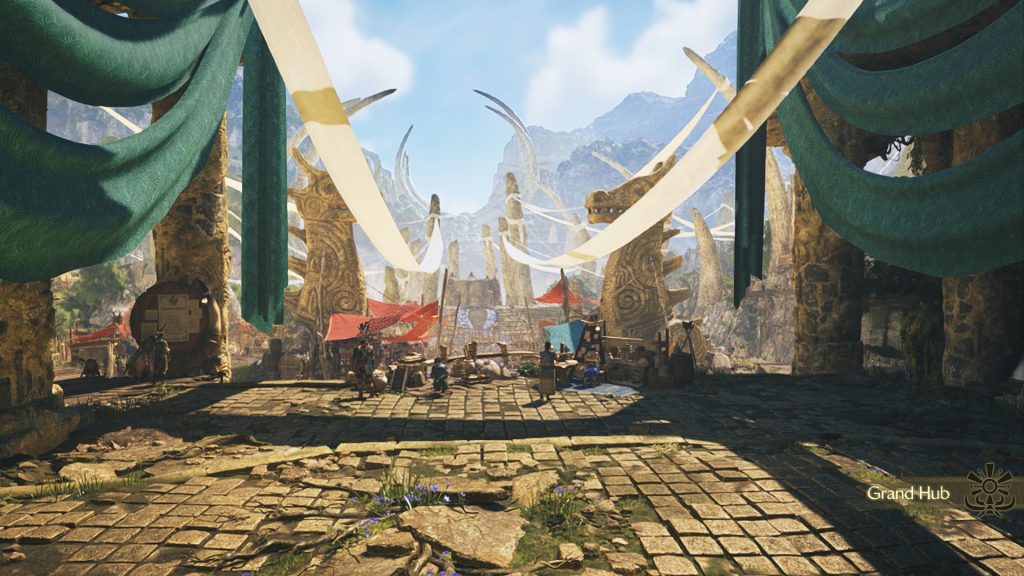
End-Game
At launch, the Monster Hunter Wilds community found itself in a bit of a paradox. The core narrative was a beautifully voice-acted, straightforward affair, but veteran hunters quickly began whispering online: “Is this too easy?”
The base endgame felt relatively tame compared to the brutal walls of past entries. Capcom clearly took that feedback personally. Over the course of 2025, the difficulty dial was turned to eleven.
The turning point was the legendary Final Fantasy XIV crossover event featuring Omega Planetes. This multiplayer-focused, raid-like behemoth forced players into strict MMO-style roles, requiring dedicated “tanks” to draw red enmity lines, specific positioning for AoE “Mustard Bombs,” and precise environmental trap timing. It brought back the sweaty-palmed, frantic, classic Monster Hunter joy. Trying to play this independently was tough, with randoms on SOS carting more than you would like.
Combined with the final base-game Title Updates delivering Arch-Tempered Arkveld (requiring Hunter Rank 100+) and Gamma armor sets, the endgame is now an absolute goldmine for players who want to test their builds against the absolute pinnacle of digital carnage.
Coming back to it recently has been a little bit of a slap in the face. When I thought I was plenty good enough, I’m now not. At least not without getting rid of that ring-rust.
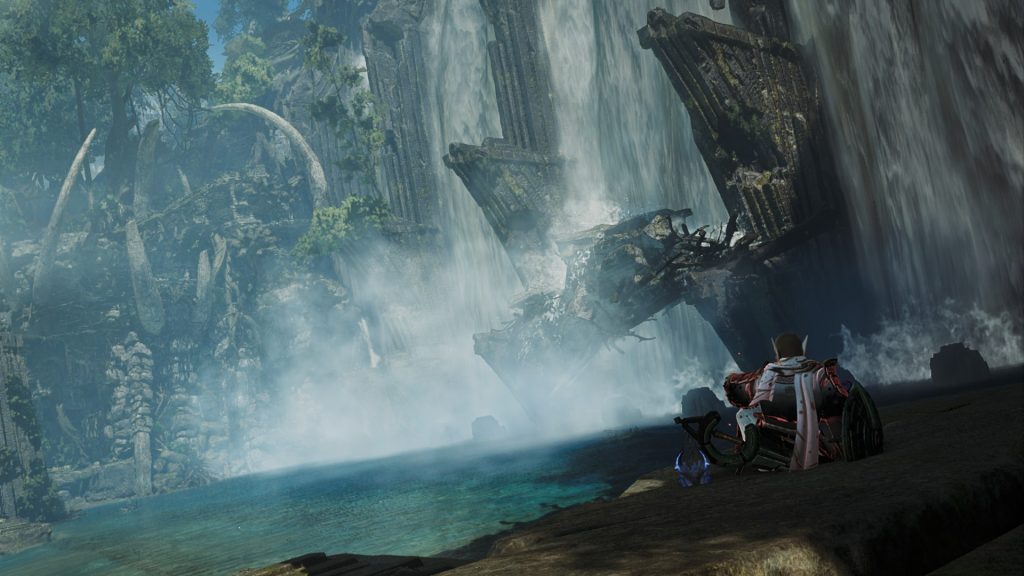
Overall
It’s impossible to review Monster Hunter Wilds without talking about its technical journey.
At launch, the game was heavily hampered by severe optimization issues, particularly on the PC/Steam version. Astronomical VRAM calculations, frame-rate hitching, and optimization bugs initially held back what was otherwise a masterpiece. Furthermore, Capcom’s traditionally awkward, obtuse multiplayer lobby systems persisted.
Thankfully, 2026 tells a completely different story. Through a series of transparent “Guild Reports,” Capcom directly addressed player feedback.
Major engine overhauls drastically reduced actual VRAM usage, stabilized frame rates on mid-range hardware (like Ryzen 7 setups), and polished the user interface, such as fixing map-access overlap bugs and improving the responsiveness and movement speed of the Seikret.
While onboarding for newcomers remains dense with menus, and playing with random allies via SOS flares can still be a crapshoot, the underlying technical foundation is finally as polished as the gameplay. Monster Hunter Wilds was Ninja Refinery’s runner-up Game of the Year in 2025 and its most played title.
Now, fully optimized and boasting a massive ecosystem of content just ahead of its upcoming expansion, it stands as an Exceptional triumph.