


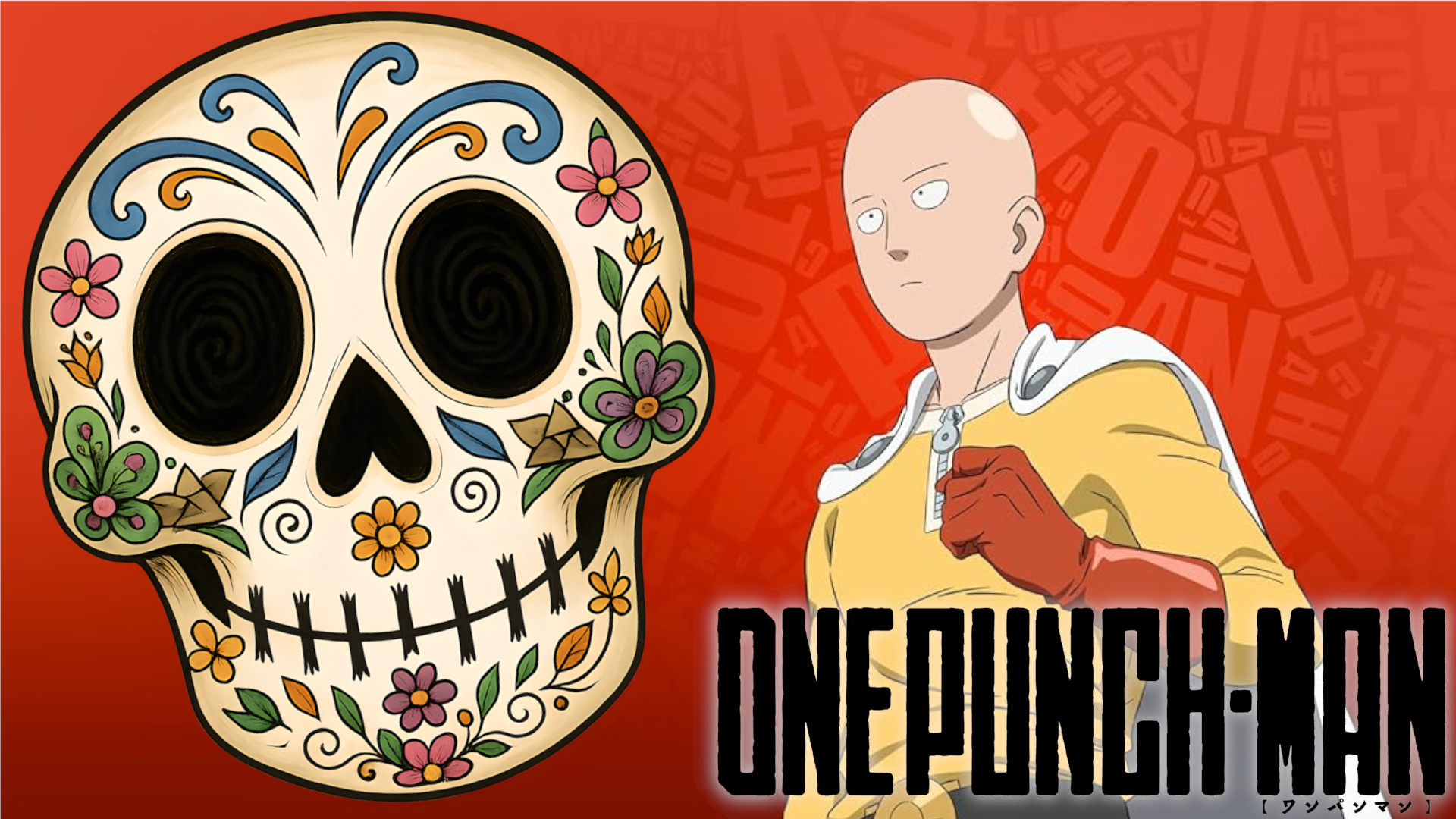
We’ve just finished-up watching Season 3 (part one?) of One Punch Man and whilst it received a lot of criticism, it wasn’t anywhere near as bad as folk made it out to be.
That being said, there were absolutely times where the production was clearly not where it needed to be and the quality drop-off from Season 1 can’t be ignored. If there was just more proper Saitama action in there, it would have probably had some more love. But hey-ho. Hopefully the critique from fans is able to help drive positive change moving forwards.
It’s easy to get caught up in negativity, though. So we wanted to remind ourselves why One Punch Man is one of our favourites, still
The Subversion of the Superhero Power Fantasy
One Punch Man arrived at a time when superhero media was dominated by the struggle for growth.
Most stories in this genre follow a predictable arc where the protagonist must train, fail, and eventually overcome a more powerful foe.
Saitama completely removes this tension by starting the story at the finish line. He has already achieved the ultimate power, and the result is a profound sense of boredom.
This premise resonates with audiences because it shifts the focus from the outcome of a fight to the internal state of the hero. The series becomes a comedy about the mundane reality of being a god in a world that still operates on human rules.
It’s such a refreshing take on the scenario we regularly see. Whilst we love the classic tropes and arcs, One Punch Man set itself apart from the get go and that hook is the core conceit that keeps us coming back.

Saitama and the Burden of Infinite Strength
The heart of the series is Saitama himself.
Unlike traditional heroes who find purpose in their abilities, Saitama finds himself increasingly alienated by his. His lack of ego is his most endearing quality. He does not seek fame or fortune, often allowing others to take credit for his work just to keep his life simple.
This creates a unique brand of empathy for the viewer. We see a man who reached his goal and realized it did not solve his problems. He still worries about grocery sales and paying rent, making the most powerful being in existence strangely relatable to anyone dealing with the repetitive nature of daily life.
Genos and the Traditional Shonen Archetype
If Saitama is the subversion of the genre, Genos is the embodiment of its tropes.
He is the classic revenge-driven cyborg, complete with a tragic backstory and a relentless desire to become stronger. His presence is vital because he provides the contrast necessary for the comedy to land. Genos approaches every situation with extreme intensity, treating Saitama as a profound philosopher even when Saitama is just trying to remember what day it is.
Through Genos, the audience gets to see the Hero Association from the perspective of someone who actually cares about the rankings and the politics, highlighting how absurd those systems are when compared to Saitama’s raw, unbothered power.
The parallells to My Hero Academia have started to show themselves here. One Punch Man treats heroes in a similar way, and having them essentially act as a goverened body is something you don’t see too often, either. Genos helpsdrive that home, as does Season 3 and the arc of the S-Class heroes going in on the rescue mission.

World Building and the Hero Association
The setting of One Punch Man is a masterpiece of satirical exposition. The world is divided into lettered cities that are constantly under siege by bizarre monsters ranging from deep-sea kings to ancient subterranean dwellers.
By establishing the Hero Association, the series critiques the commercialization of altruism. Heroes are ranked like idols or professional athletes, and their worth is determined by popularity and paperwork rather than their actual desire to save people.
This structured environment creates a perfect foil for Saitama, who is a true hero by choice but is consistently dismissed by the system because he does not fit the corporate mold.
It borders on the classic trope of the protagonist not fitting in with the wider world, in a way that they so desperately desire to be a part of. But flips the whole thing on its head, and that’s why we love it.
The Art of the Antagonists
The villains in the series often receive more screen time and backstory than Saitama does in their respective episodes. This is a deliberate choice that builds tension where it should not exist.
Characters like Lord Boros are presented with the gravitas of a final boss in any other series. They have complex motivations, incredible designs, and overwhelming power levels. By spending time on the exposition of these threats, the series makes the eventual punch feel both hilarious and tragic.
We see the height of what is possible in this world, only for it to be erased by a bored man in a yellow jumpsuit who forgot it was Saturday.

Silly is good
Look, there are those series that take themselves way too seriously (looking at you Attack on Titan!). And there are those that have heart and push a hero with ure intentions and unwavering sense of justice or good, or whatever.
One Punch Man has a protagonist that wants more for himself, but because he’s so powerful, his journey isn’t about getting there. It’s about being there and still not being able to really be a part of the world. It’s silly and genuinely funny. Which we don’t see enough of, especially in the type of series that it is.
Saitama is a great protagonist, and the world gets given room to breathe. One Punch Man, despite it’s flaws in recent delivery, is still one of the best.