









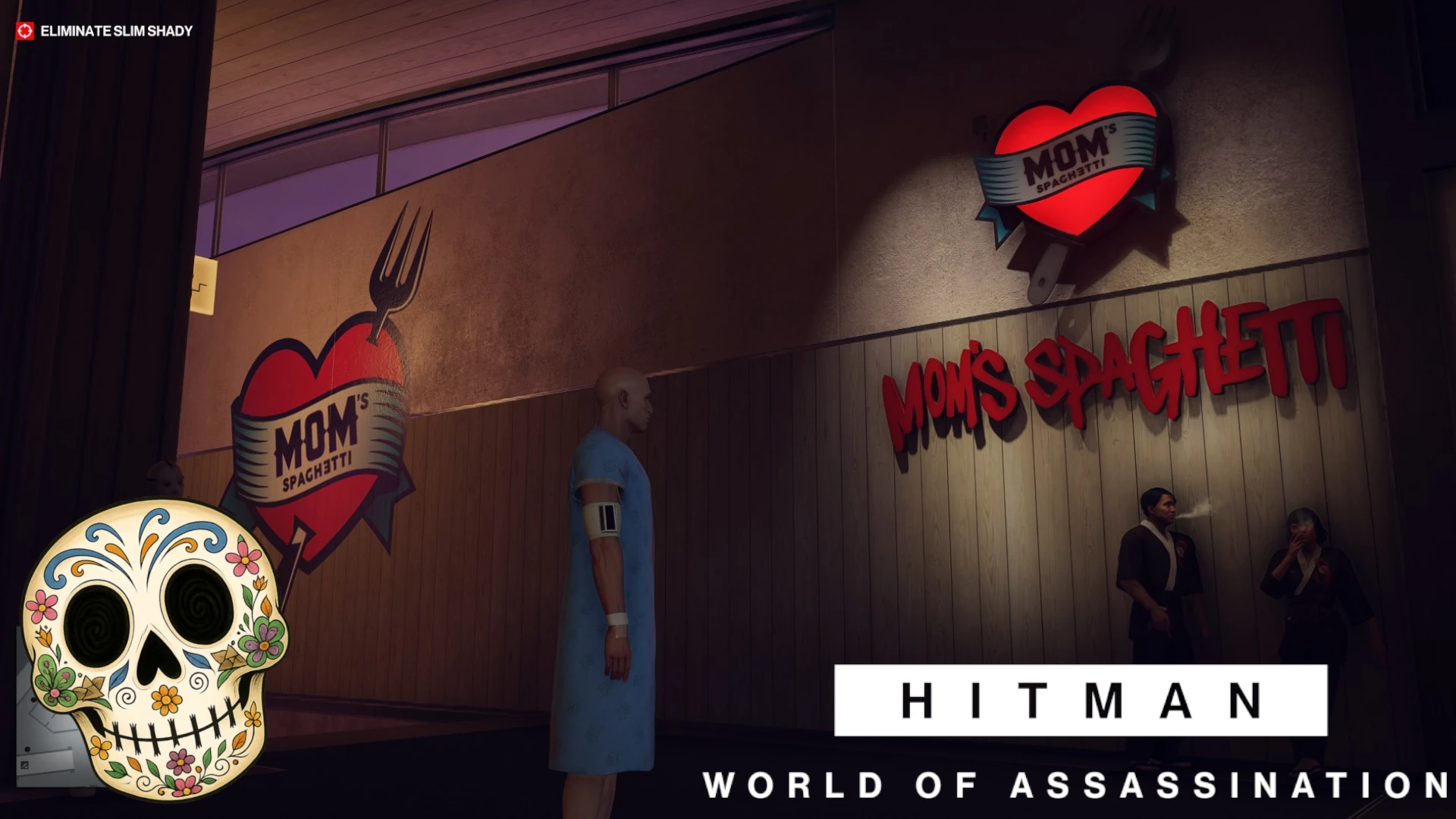
When you think of modern gaming, and all-time classics there are plenty of games and series that should be a part of the conversation. But one for me, that doesn’t seem to quite get its flowers is Hitman. More specifically, the World of Assassination trilogy. 3 back-to-back gems that have just taken a series, re-invented it, revived it and made it something incredibly special. Hitman is some of the best gaming out there.
By treating the global espionage sandbox not as a linear action game, but as a collection of hyper-detailed, clockwork dioramas, IO Interactive created a masterpiece of clockwork design.
I’ve tried for years to appropriately write about Hitman and the World of Assassination Trilogy. This piece has been in draft and re-written many times, long before dyingartmedia.com was a thing. Sat in Notion waiting for the right time to spark another go at it. Hitman deserves the effort.
Spurred-on by my current playthrough of 007 First Light, catching Hitman vibes left-right-and-centre. I needed to gush a little about this masterwork of gaming.
Here is a deep-dive into why this trilogy represents the absolute pinnacle of the Hitman franchise, how it evolved across three stellar entries, and why its replayability is practically endless.
Clockwork Perfection
At its core, the Hitman World of Assassination trilogy succeeds because it respects the player’s intelligence. It swaps cheap, reactionary adrenaline for slow-burn, intellectual satisfaction.
Every single map is a living, breathing clockwork mechanism. NPCs have strict routines, security guards have specific patrol routes, and targets loop through meticulously scripted schedules. As Agent 47, your job isn’t to break the clockwork—it’s to learn it so thoroughly that you can slip a wrench into the gears without anyone noticing you were ever there.
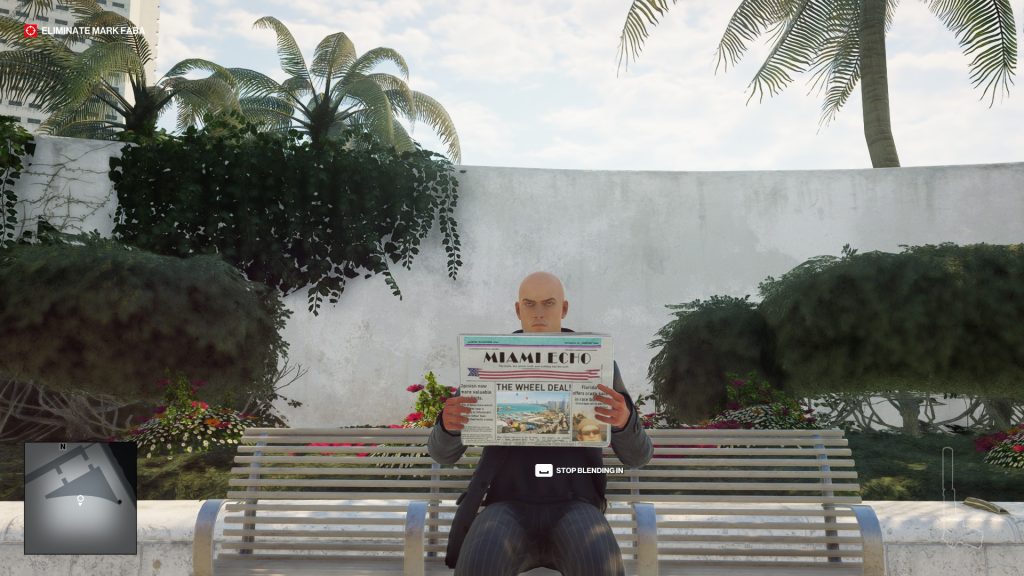
The brilliance lies in the intersection of social stealth and environmental problem-solving. Disguises aren’t just cosmetic skins; they are literal keys that unlock specific zones of the map. By subverting the traditional stealth trope of “hide in the shadows,” Hitman forces you to hide in plain sight, dressed as a waiter, a technician, or a high-fashion model, playing a high-stakes game of pretend.
There’s nothing quite so engaging, as being able to regularly just trick people in the world into thinking you belong. The consequences of their trust are often dire (for them). But the power trip and fun, are unparalleled.

The Evolution: Refinement Game After Game
While the core mechanical loop remained wonderfully consistent, the trilogy’s evolution across its six-year rollout is a masterclass in iterative design. Hitman went from strong to stronger, to overpowered. It’s never been bad, but always gotten better.
Hitman (2016) — The Foundation
The first entry laid down the foundational framework. It established the massive scale of the maps, the disguise mechanics, and the “Opportunities” system (later renamed Mission Stories) to help players navigate the overwhelming density of the environments. Maps like Paris and Sapienza set a gold standard for what a Hitman level could be.
Releasing individual maps as episodes, over a period of time was initially a confusing move. But it ultimately paid-off as a means to demonstrate just how re-playable Hitman is.
Having just a map to go at, at a time meant you could really sink into them and learn them. Getting free maps on occasion, too, really helped to draw people in.
Hitman 2 (2018) — Mechanical Polish
The sequel didn’t reinvent the wheel; it just made it spin flawlessly. It introduced crucial quality-of-life upgrades that fundamentally altered gameplay:
- Picture-in-Picture: A game-changer that alerts you in real-time when a body is found or a camera spots you, allowing you to react instantly.
- Environmental Hiding: The ability to blend into tall foliage or thick crowds, adding layers to your infiltration options.
- Item Balancing: The introduction of concussive items and a proper briefcase to conceal sniper rifles, fixing a major logistical headache from the first game.
Hitman 3 (2021) — The Dramatic Finale
The final entry brought a heavier narrative focus, seamlessly blending cinematic storytelling directly into the mission structures (such as the incredible murder mystery in Dartmoor). Mechanically, it added a persistent camera tool for hacking and scanning, short-cuts that you could permanently unlock across multiple playthroughs, and massive engine optimisations that made the entire trilogy look and run better than ever before.
Level Design as a Fine Art
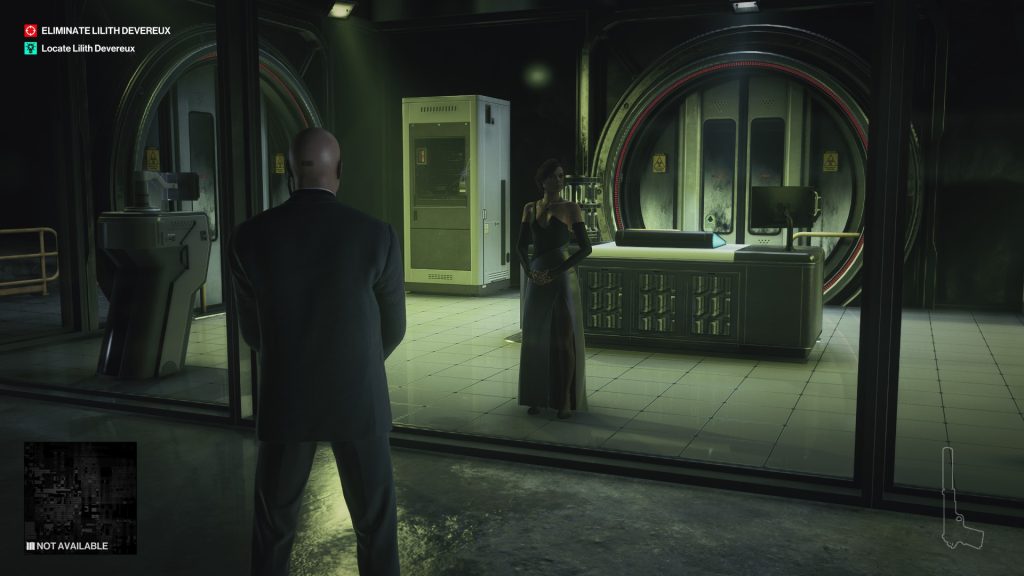
You cannot talk about the Hitman trilogy without talking about the maps. They aren’t just levels; they are architectural marvels that double as massive, multi-layered puzzles. The intricacy of their layout is staggering.
Take Sapienza (from the first game), a sun-drenched Italian coastal town. It features a bustling public square, a crowded beach, a heavily fortified private mansion, and a secret underground sci-fi laboratory. Each area bleeds into the next seamlessly, offering dozens of infiltration points.
Or look at Chongqing (from the final entry), a rain-slicked, neon-lit labyrinth of verticality. It stacks a sprawling urban street level, a cramped apartment complex, a secret underground high-tech research facility, and rooftop walkways all on top of one another.
IO Interactive’s genius is in creating “swiss cheese” level design. Every wall has a vent, every pipe can be climbed, and every locked door has a window, a keycard, or a crowbar hidden somewhere nearby. No matter where you are, there are always three or four distinct ways to reach your destination.
The Endless Replayability Loop
Most games are done once the credits roll. For a Hitman fan, finishing a level for the first time is merely completing the tutorial. The trilogy is explicitly engineered to be replayed dozens, if not hundreds, of times.
IO Interactive achieved this through a brilliant mastery of progression and game modes:
- Mission Stories: Meticulously crafted, narrative-driven assassination paths that guide you through elaborate, often darkly comedic setups—like replacing a target’s heart medication or rigging a ejector seat on a jet fighter.
- Mastery Levels: Every unique challenge you complete grants experience points that level up your map mastery. This unlocks new starting locations (e.g., infiltrating as a chef directly in the kitchen), new agency pickup locations, and an arsenal of new gear, poisons, and firearms to bring into future runs.
- Elusive Targets: High-stakes, time-limited contracts with only one shot at success, forcing you to rely entirely on your map knowledge without the safety net of mid-game saves.
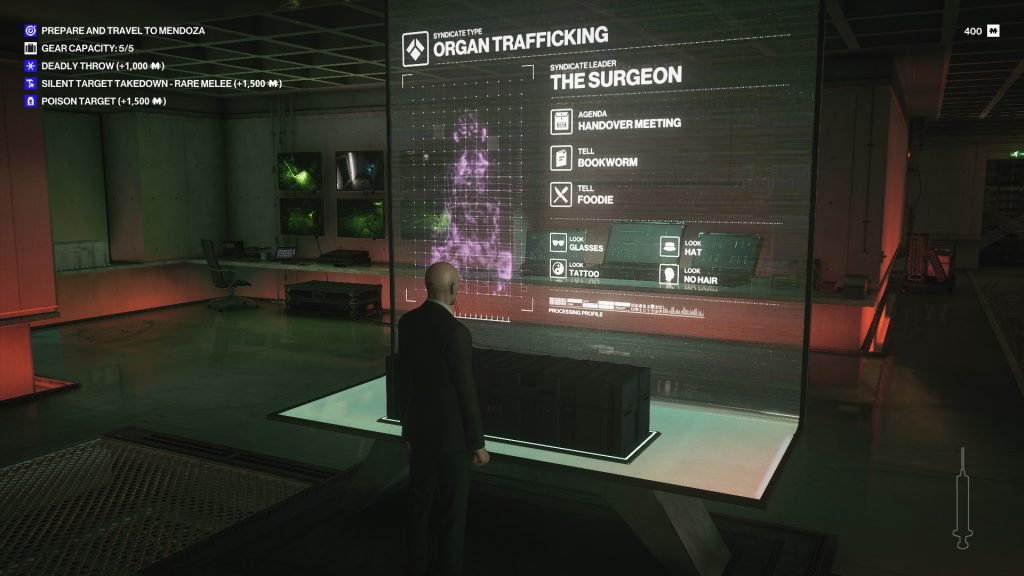
- Freelancer Mode: Introduced later in the trilogy’s lifecycle, this rogue-like mode completely flipped the script. It strips away your safety nets, randomises target placements, and forces you to buy and risk your own gear across randomised campaigns, turning Hitman into an infinitely replayable, high-tension tactical simulation.

Hitman
Ultimately, the World of Assassination trilogy stands as a definitive argument for the “quality over quantity” approach to map design.
By giving players fewer, infinitely more complex spaces to master, the Hitman games created a playground of dark comedy, tactical perfection, and unmatched replay value. It is the written proof that when game developers focus on deep, interlocking systems rather than linear spectacle, they create something truly timeless.
I’ve bought the trilogy multiple times for a variety of platforms, and I’d continue to do so if I can play it elsewhere. Because Hitman is genuinely that good, that deep and that interesting.
If you’ve never played any of them, I urge you to take a dive. There’s so much potential fun to be had here, it could take years to fully see everything the trilogy has to offer.
You can see why IO Interactive got the 007 First Light job, because that craft and care is there, all-over it, too.