



We’re fully into Pirate Month here at dyingartmedia.com and honestly, it’s been great so far. Diving into Sea of Thieves, Skull and Bones, Pirate Yakuza in Hawaii and most recently, Assassin’s Creed Black Flag Resynced.
Each game handles the pirate fantasy so differently, and we could absolutely talk about that in itself. But we think the fundamental experience of pirate games must be the sailing, right? How are games handling your time on the open seas?
To really understand how gaming handles the open ocean, we have to take a quick look at how different studios interpret the pirate identity. Here is how our four contenders stack up when you step behind the helm.
Sea of Thieves
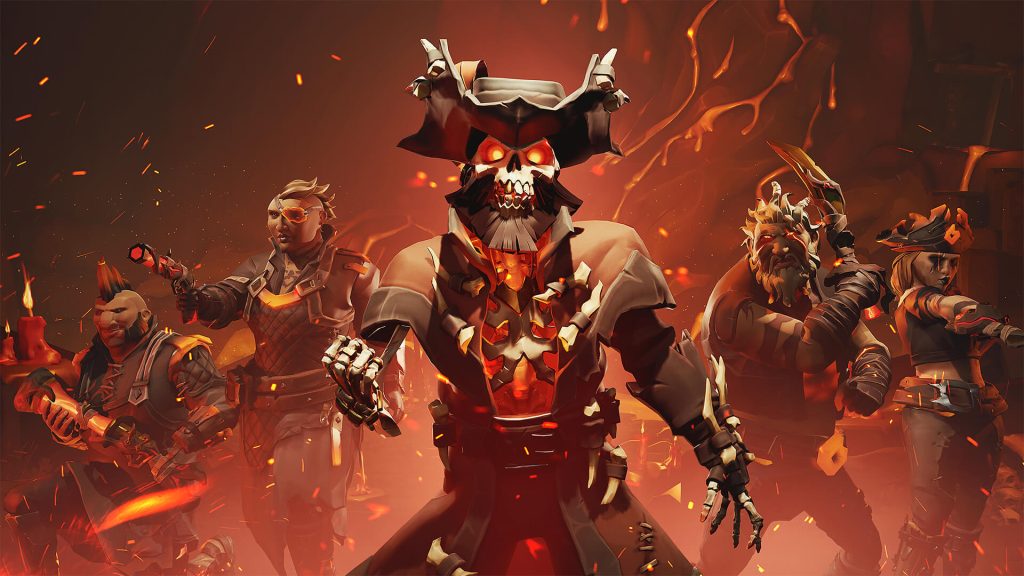
The Pirate Vibe: Absolute cooperative freedom. You aren’t playing as a ship; you are a flesh-and-blood pirate operating a ship. It nails the romance and the mundane reality of the life—drinking grog, playing shanties, digging for chest loot, and manually managing every single rope.
The Sailing Experience: This is the most tactile, physics-based sailing on the market. There is no UI speedometer or wind arrow. You look at the ripples in the wind, manually angle the sails, and visually track your map down in the hull. If you drop anchor at full speed, your ship violently skids. It requires active, constant management.
Assassin’s Creed Black Flag Resynced
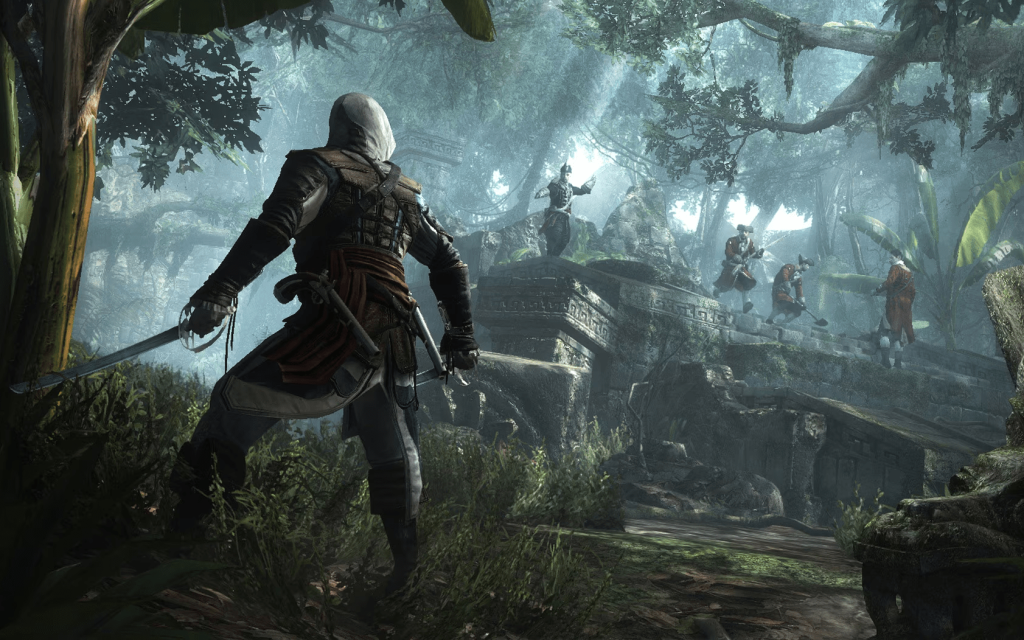
The Pirate Vibe: The ultimate cinematic swashbuckler. Edward Kenway’s journey feels like a grand historical epic. Resynced strips out the old modern-day interruptions, smooths out the stealth with a manual crouch, and adds a brand-new endgame centred on Blackbeard. It blends classic privateer plundering with hyper-polished action-adventure.
The Sailing Experience: Pure, responsive joy. The Resynced remake updates the classic Jackdaw mechanics with modern physics rendering, but keeps the legendary arcade-weight handling. You can pull tight turns, instantly switch ammunition types, and go from full sail to travel speed seamlessly. It values theatrical momentum over realistic friction.
Skull and Bones
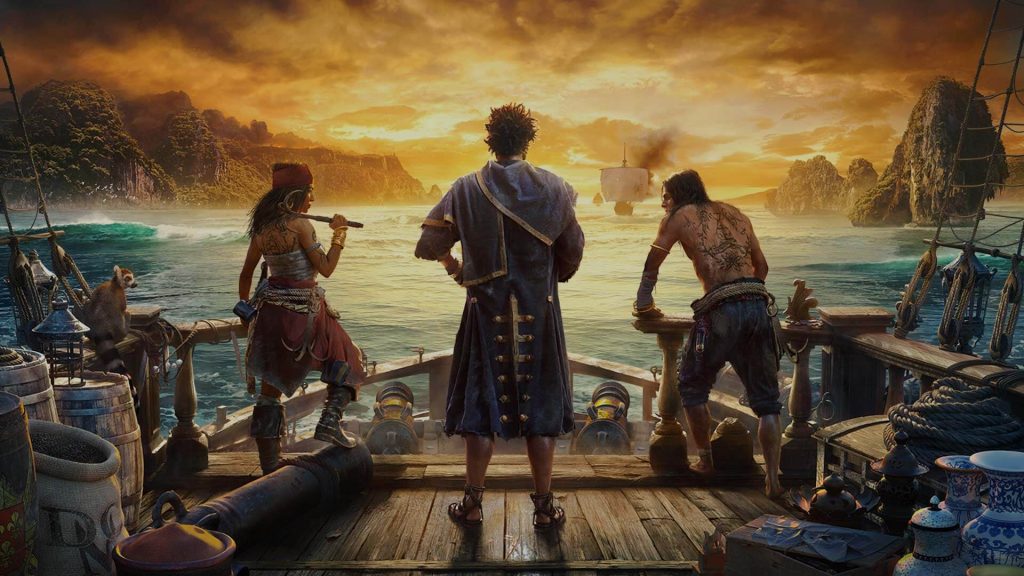
The Pirate Vibe: A transactional RPG numbers game. Instead of a pirate adventure, you are building an economic smuggling empire. The focus is squarely on resource gathering, blueprints, and optimisation. You don’t walk around your ship or board enemies manually; everything is handled via menu systems and progress bars.
The Sailing Experience: You are the ship. The handling feels surprisingly weightless, playing more like an naval-themed arcade tank than a wooden vessel. You have a stamina bar for your crew when forcing them to trim the sails, turning wind resistance into a resource-management mechanic rather than a physical navigation puzzle.
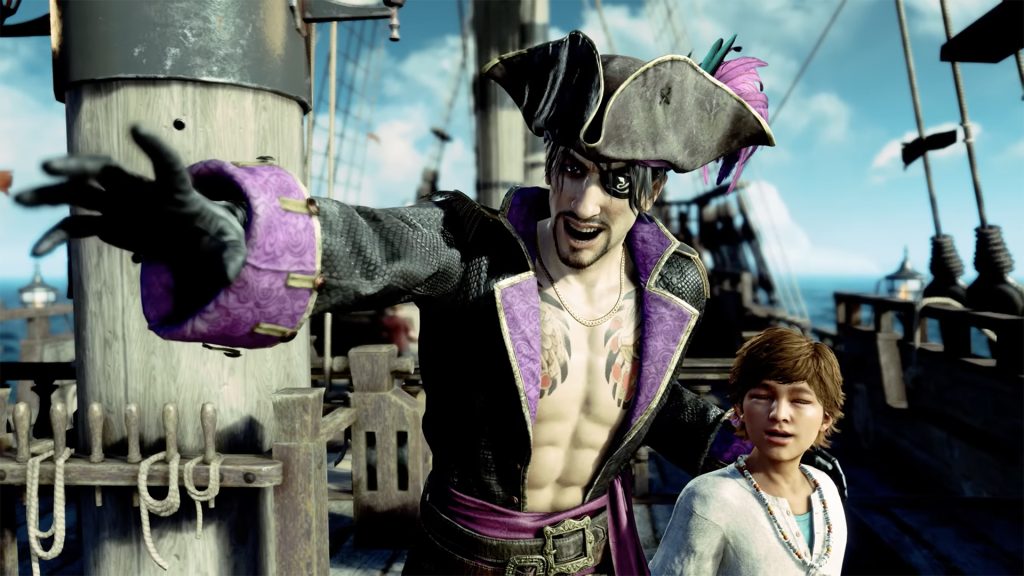
Like a Dragon: Pirate Yakuza in Hawaii
The Pirate Vibe: Pure, unadulterated Ryu Ga Gotoku chaos. Goro Majima gets amnesia, washes up on a beach, and decides to become a pirate captain because… why not? It balances deeply emotional franchise storytelling with brilliant absurdity (including pirate karaoke). It’s a modern-day fever dream where “pirating” is a vehicle for over-the-top brawl styles.
The Sailing Experience: Heavily automated and deeply arcade-focused. You commandeer the Goromaru, but you don’t control individual masts or micro-manage wind speeds. Instead, you position yourself for fixed-length cannon fires and use a speed boost button. Once you shred an enemy’s health, it triggers a cutscene to transition straight into a chaotic, crew-vs-crew melee brawl.
The Verdicts: Answering the Big Questions
What works best for the most realistic experience?
Winner: Sea of Thieves
If your metric for realism is interaction rather than just pretty graphics, nothing touches Sea of Thieves. It forces you to respect the sea. Sailing into a storm isn’t just a visual filter; your compass spins out of control, water fills your hold, and the wheel physically yanks itself out of your hands. The requirement to manually adjust your sails to catch the wind makes you actually feel the physics of a wooden boat on the water.
What is the most fun?
Winner: Assassin’s Creed Black Flag Resynced
Resynced captures the sheer romanticism of being a pirate better than anything else. There is an unmatched magic to crashing through massive rogue waves in the Caribbean while your crew belts out flawlessly rendered sea shanties, only to transition instantly into a cinematic boarding action. It cuts out the tedious micro-management found in Sea of Thieves and the dry menu-gating of Skull and Bones, leaving you with pure, unfiltered adventure adrenaline.
Which ship combat is easiest to get into and master?
Winner: Like a Dragon: Pirate Yakuza in Hawaii
RGG Studio built their naval combat to be an accessible bridge to their signature brawling. Because the ship mechanics are highly streamlined—you primarily steer, aim side-mounted cannons, and manage a basic dodge/boost—there is almost zero learning curve. You don’t have to calculate shot lead angles or manage complex hull repair cycles. It’s built to get you straight to the real fun: swinging onto an enemy deck as Goro Majima and beating people up with dual-wielded cutlasses.
Pirates everywhere!
2026 truly feels like a great year for pirates in gaming. It seems very clear the Assassin’s Creed Black Flag Resynced is going to be on the tip of people’s tongues in end of year discussions. Sea of Thieves is opening itself-up more to players and communities to really have a play and get into the sandbox.
The most interesting thing for us is how engaging Like a Dragon: Pirate Yakuza in Hawaii has become. It’s taking time away from the other games, because it’s just so much fun.
We’re eating well with Pirate gaming this month thankfully! And whilst Skull and Bones hasn’t won any of the categories above, we think it’s one of the most interesting games in the mix. Completely up-ending what we thought it would be as a game, and changing how we look at pirate games.
What’s your favourite pirate game? What do you think handles the fantasy of sailing on the open seas, the best?


