





There was a time when calling Monster Hunter Rise the best game in the series would get you aggressively met with a resounding “No!” from the community.
When we first covered Rise back during its original release, it was easy to see why purists were skeptical. It tore down the slow, deliberate, and sometimes obtuse scaffolding of the franchise in favour of pure, unfiltered efficiency.
It was the pinnacle, though. Monster Hunter Rise was the sign of things to come, and it was the right turn to take.
But looking back at it now in 2026, running natively on the Switch 2, time has been incredibly kind to Rise. It wasn’t a dilution of the franchise; it was a blueprint for its future.
If Monster Hunter Wilds proved anything, it was that the quality-of-life leaps pioneered right here were necessary evolutions.
Now, experiencing Kamura Village on Nintendo’s upgraded hardware, Rise has finally shed the few technical shackles that held it back from absolute perfection.

The Flow
What made Rise a masterpiece then (and what keeps it a masterclass in action design now) is how it handles momentum.
Before Monster Hunter Rise, a hunt felt a bit like American Football: a massive burst of intense action, followed by a lot of stop-start resetting. This game threw that out the window.
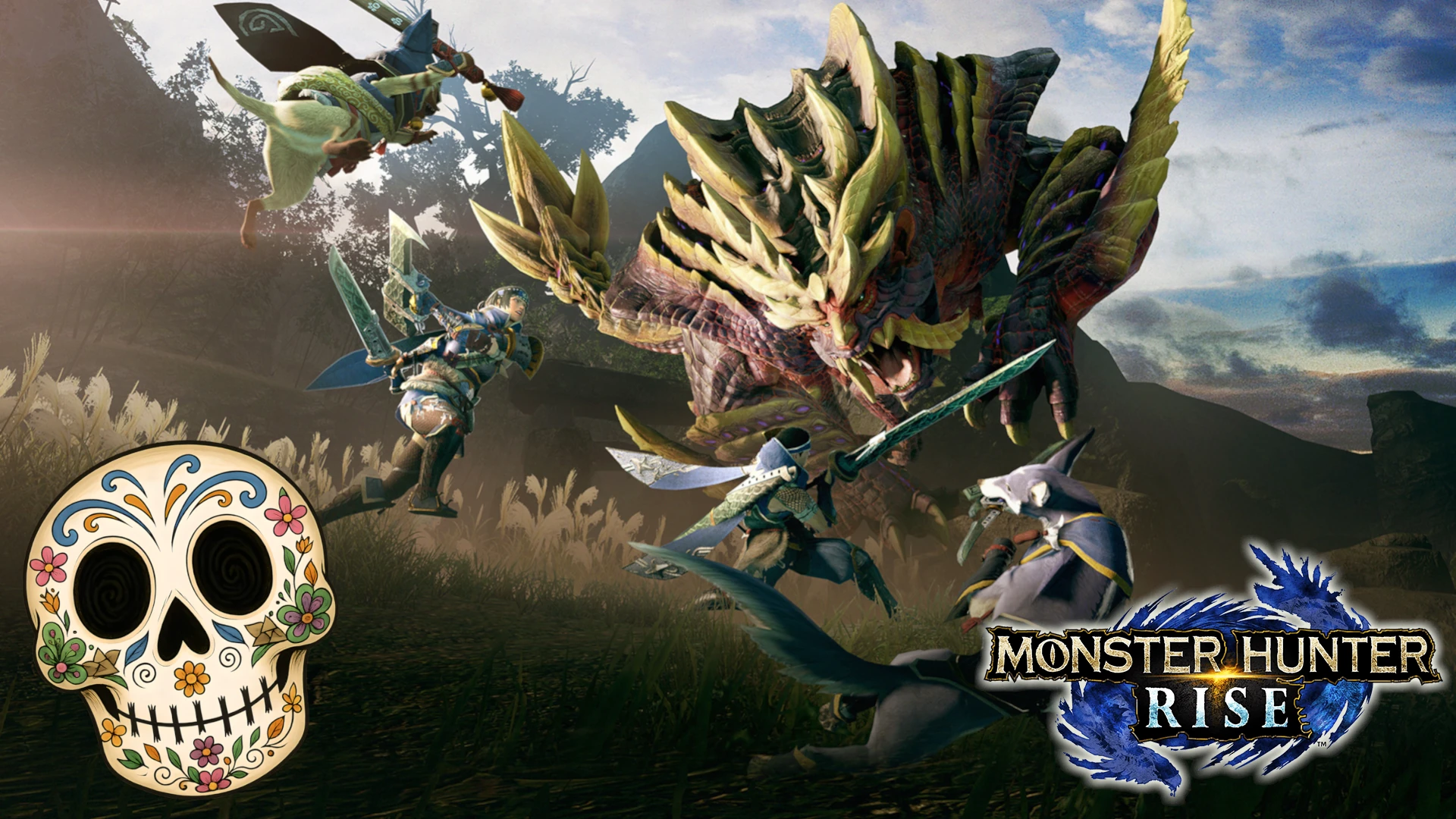
The introduction of the Wirebug and Palamutes shifted the focus to a constant, reactive flow.
Being able to sprint up cliffs, wire-dash through the air, and sharpen your weapon or chug a potion seamlessly on the back of a ninja-dog changed the rhythm of the hunt completely.
The banal, tedious acts of the past (like stopping to individual-mine every ore node or bonepile) were reduced to slick, one-time actions on the move.
And let’s talk about the weapons. Taking up the Hammer in Rise remains one of the most satisfying power-trips in gaming, made infinitely more versatile by Silkbind attacks that let you bring heavy-hitting impact to the skies.
Every single weapon style felt unlocked by this newfound verticality. Even when we main the Insect Glaive, it added some manoeuvrability and pace, where you maybe didn’t expect to see some.
Then there’s the Wyvern Riding. While some initially mourned the loss of World’s classic monster mounting and Clutch Claw, Monster Hunter Rise pulled a brilliant trick out of its sleeve.
It took the best part of the Clutch Claw (slamming a beast into a wall) and turned it into a full-blown mechanic where you literally wrangle an Apex monster to wreck havoc on another target.
It’s a beautifully chaotic addition to the sandbox that still feels incredibly rewarding to pull off.

No More Compromises
When Monster Hunter Rise originally launched, it was an absolute marvel for the base Nintendo Switch. Built on Capcom’s RE Engine, it pushed that tiny cartridge to its absolute limit.
But let’s be honest: we had to make compromises. The maps and biomes felt a bit sparse and structurally pared-down compared to the dense, living ecosystems of World.
We accepted it because the game ran buttery smooth, even when four hunters, two buddies, and two massive monsters were causing absolute screen-melting chaos.
Playing it now on the Switch 2? Those compromises are ancient history.
The jump in hardware acts like a lens finally clicking into sharp focus. The RE Engine scales beautifully here; those muddy textures and distant, low-framerate monster animations are entirely gone.
The game retains its lightning-fast load times but backs them up with rock-solid performance, crisp resolution, and visual depth that bridges the gap between the original portable release and the PC port.
It provides that premium, high-fidelity hunt on the go without the handheld feeling like it’s about to melt in your hands. Now we can just pop a beer and have a blast with an even better experience than before.
More importantly, it highlights just how brilliant the core art direction was. The vibrant, Feudal Japan-inspired aesthetic of Kamura Village and the distinct, folklore-infused monster designs pop with a level of clarity we simply couldn’t get on the legacy hardware.
It is disappointing that there’s been no Switch 2 upgrade option for Monster Hunter Rise, but it makes sense. We’re more likely to see a port of Wilds, we would guess.

Relics of the Old World
Of course, revisiting Monster Hunter Rise reminds us that Capcom didn’t solve every legacy issue. Even in 2026, the game’s onboarding remains a massive wall of text and menus that can easily terrify a newcomer. It still takes a solid dozen hours for the gameplay loop to truly click.
The matchmaking and lobby system also still feel uniquely obtuse.
Splitting the single-player Village quests and the multiplayer Hub quests into entirely separate entities was…….a choice that still feels a bit clunky today, especially if you just want to jump into a seamless session with friends. It was the most grating thing in Monster Hunter Rise then, and it feels worse now,
And then there are the Rampages. Rise’s unique take on Tower Defense was a polarising experiment.
Setting up automated ballistae, manual cannons, and holding off waves of monsters using your Wirebug to zip across platforms is a frantic, fun distraction with a full squad, but it’s a mode that definitely shows its age when you’re grinding through it solo.

Monster Hunter Rise
Monster Hunter Rise was a bold gamble that prioritised player time, momentum, and mechanical freedom above all else. It stripped away the survival fluff to give us the most efficient, accessible, and kinetic hunting experience the series had ever seen.
On the Switch 2, it feels like the game has finally caught up to its own ambitions. The technical limitations of the past are gone, leaving behind a flawless, hyper-polished, and incredibly addictive action game.
Whether you are returning to master the Hammer once more or picking it up for the first time, Rise isn’t just a relic of the previous generation—it’s a timeless high-water mark for the genre.
Now we’ve come back to it, it’s time to see how we fare with our new love of the Sword and Shield. Monster Hunter Rise is excellent, and it’s as good today as it was upon release.