










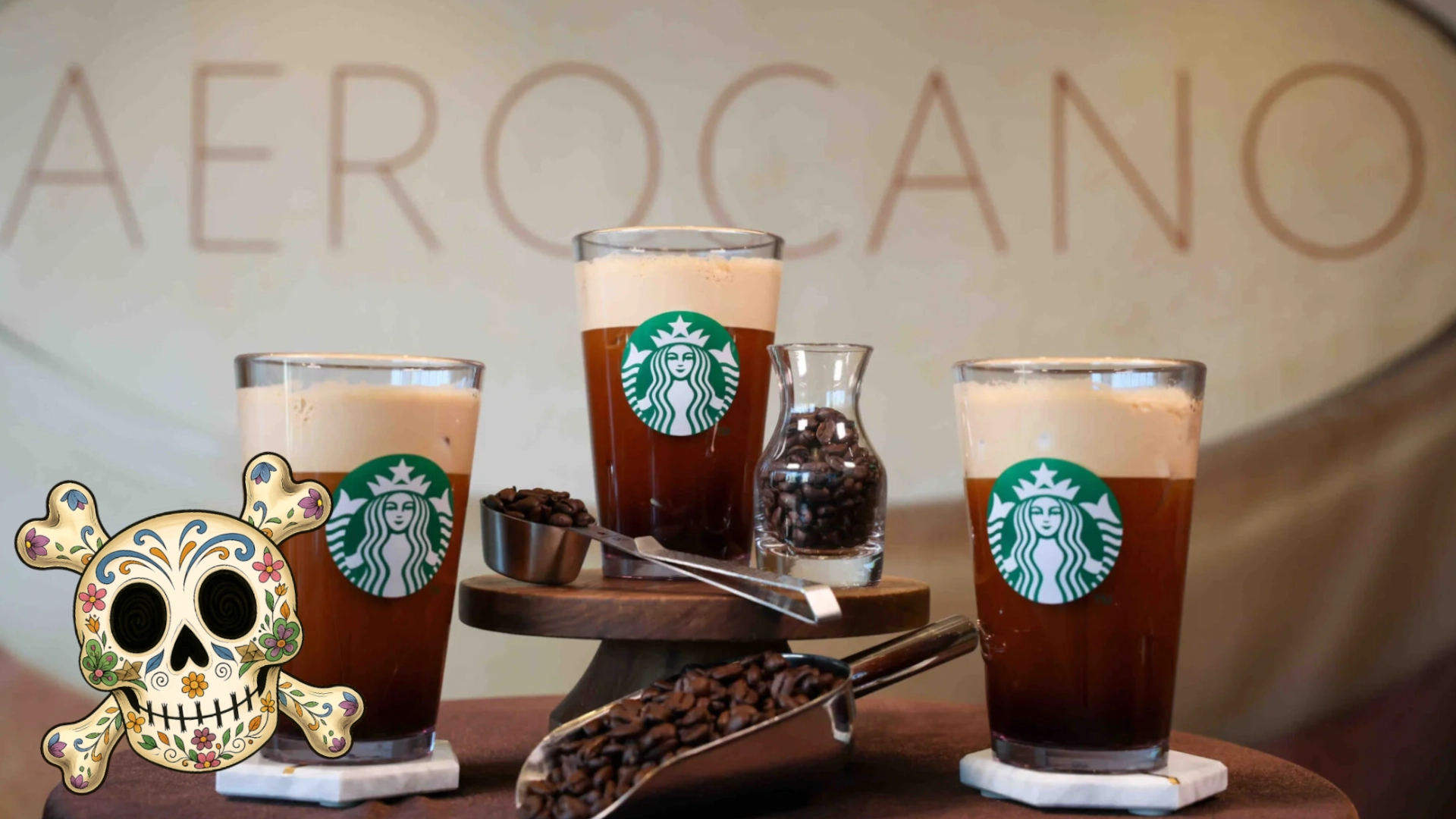
At its core, the Aerocano is surprisingly minimalist. Built around a double shot of Starbucks’ Blonde Espresso, water, and ice, the magic lies entirely in how it is processed.
The espresso, ice, and cold water are steamed together using the espresso machine’s steam wand.
As a Starbucks apologist and a fan of the Blonde Roast in their drinks, I had no choice but to see what all the fuss was about. Having seen the r/espresso furore about it in recent months, not specific to the Starbucks version itself, but the hot topic of the Aerocano.
We try to keep abreast of coffee changes where we can, and this feels like it could be significant.
Visual Presentation and Texture
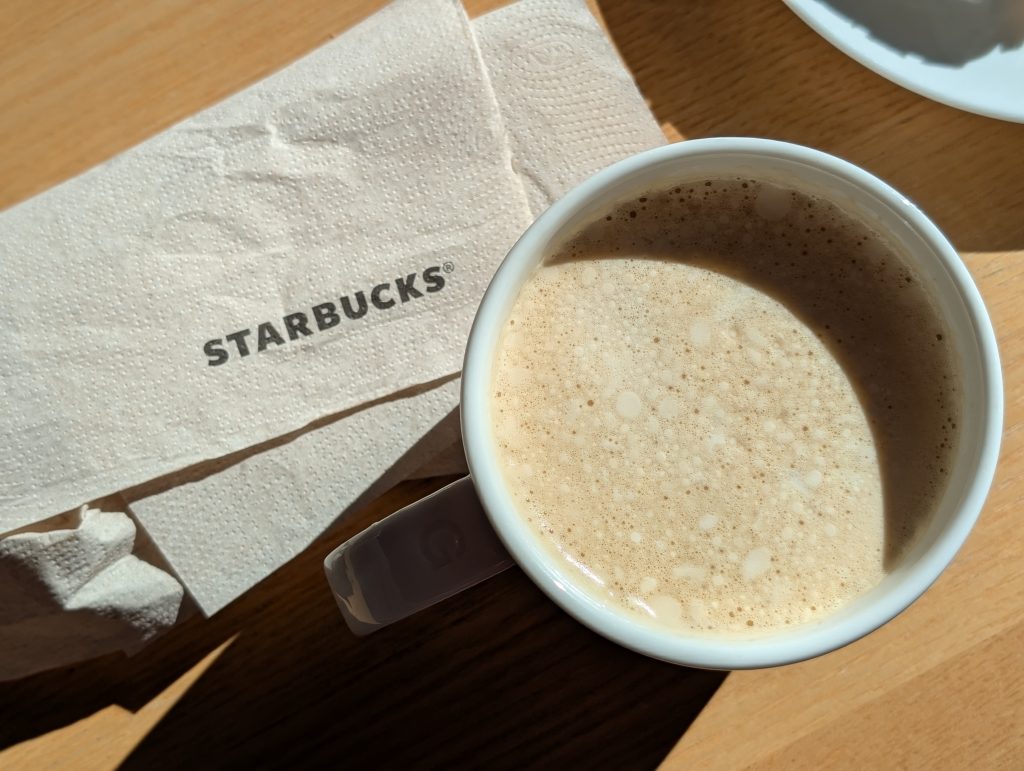
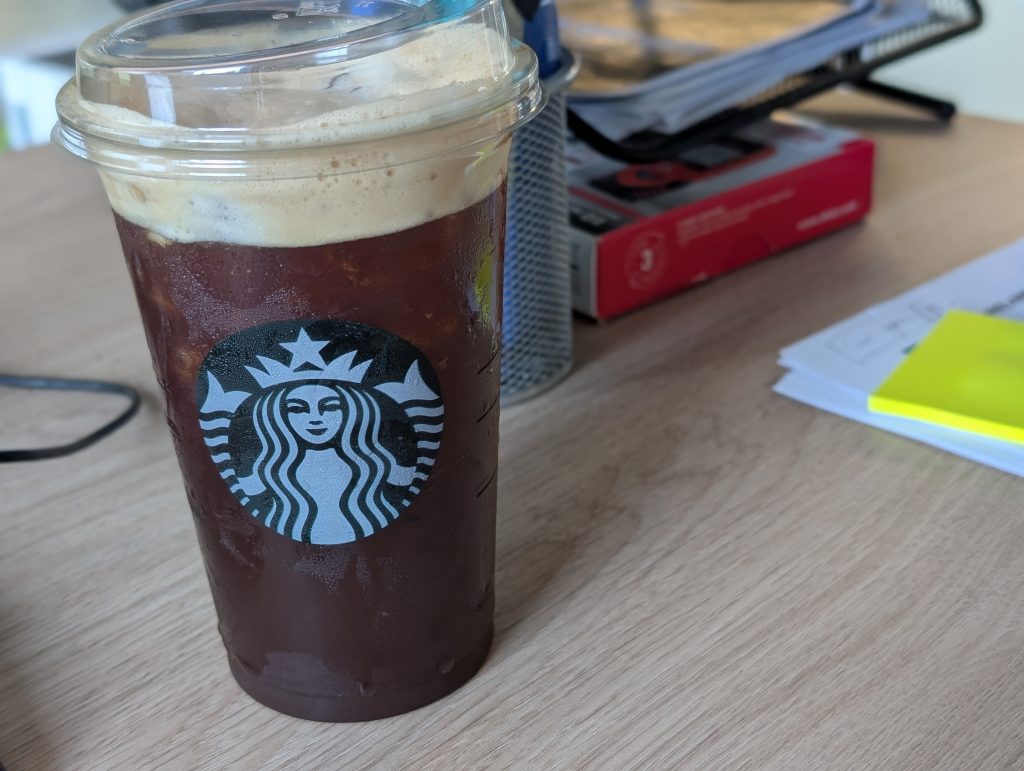
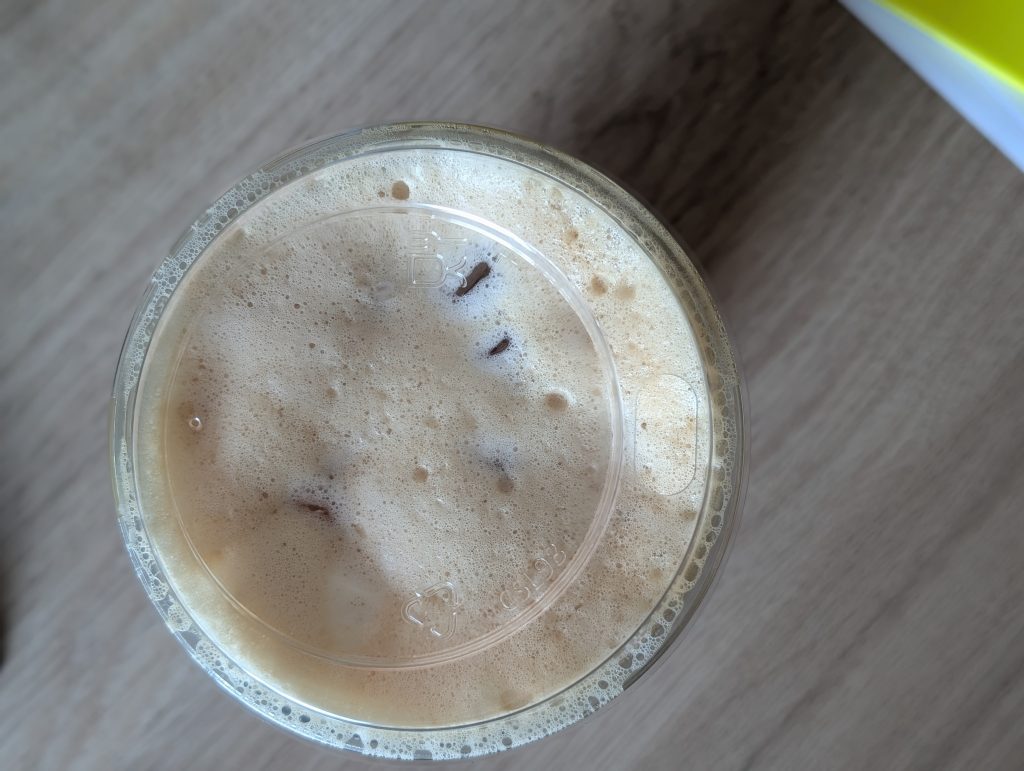
When handed to you in a clear cup, the initial visual is striking—resembling a fresh draught pint or a Nitrogen cold brew. A microfoam head sits at the top, while fine suspended microbubbles create a slow, cascading “waterfall” effect down the glass.
Texturally, this technique dramatically changes the mouthfeel compared to a standard Iced Americano. Instead of thin, watery coffee over floating ice, the steam wand forces air into the liquid while flash-chilling it against the melting ice. The result is a silky, almost velvety mouthfeel that drinks like a heavy draft beer or a milk-free Guinness.
Flavour Profile
The aeration alters how flavour compounds hit the palate:
Mellowed Acidity: The incorporation of tiny air bubbles softens the usual bright acidity of espresso, making it drink noticeably smoother.
Perceived Sweetness: Without a drop of added syrup, the whipped texture tricks the brain into perceiving a natural, subtle caramel sweetness from the blonde roast.
Clean Finish: Unlike cold foam or dairy-based iced drinks, it doesn’t leave a heavy coating on the palate.
The Verdict
If you are a fan of Nitro Cold Brew or straight espresso but want a light, unsweetened cold drink with a rich body, the Aerocano is an excellent addition to the menu.
However, the microfoam layer does degrade over time; it is a drink best enjoyed immediately after it is poured.
It’s tasty, but perhaps more of a novelty than a mainstay item on menus. You can see that it’s chasing a trend, because why else would your Autumnal offering include an iced Americano? I’m all for it, and it’s a pleasant change, but let’s not forget that this isn’t unique to Starbucks, they’ve just gotten to the market first.
The Aerocano is great, though, and you should give it a go.
Origins and Evolution: Where Did the Aerocano Come From?
While Starbucks introduced the drink to a global mainstream audience, the technique did not originate in corporate test kitchens. It represents the latest evolution in a decades-long line of foam-forward, aerated cold coffee traditions.
1. The Predecessors: Greek Caffe Frappé & Italian Shakerato
The concept of rapidly whipping or agitating espresso to create a thick, cold emulsion goes back over half a century:
Greek Caffe Frappé (1957): Originally invented by shaking instant coffee, cold water, and ice in a shaker to build a long-lasting, bitter-sweet foam structure.
Italian Espresso Shakerato: Fresh espresso shaken vigorously over ice with a touch of simple syrup in a cocktail shaker. The rapid agitation emulsifies the natural oils and crema in the espresso into a dense, velvety layer.
Freddo Espresso: A staple in Greece, where freshly pulled espresso is flash-blended using an immersion disk mixer directly with ice to generate a thick foam cap before being poured over fresh ice.
2. The Third-Wave & Social Media Pioneer Era (2021–2024)
Around 2021, specialty coffee baristas and home-brewing enthusiasts began experimenting with steam wands to solve a specific problem: How do you get the nitro-like mouthfeel of a nitrogen tap system without the expensive draft setup?
Baristas discovered that lowering a steam wand into a pitcher filled with espresso, cold water, and ice cubes aerated the mixture instantly. The ice melts rapidly, preventing the steam from actually heating the coffee, while the pressure of the steam wand forcefully injects micro-air bubbles into the liquid.
The term “Aerocano” (a portmanteau of aerate and Americano) emerged organically across specialty forums and TikTok, becoming a viral hit among home baristas using home espresso machines.
3. Specialty Markets & Global Mass Adoption (2025–2026)
Starbucks adapted this trend by initially testing it in South Korea, one of the world’s highest-consuming markets for Iced Americanos. Because draft nitrogen rigs are expensive to install and maintain across tens of thousands of global locations, the Aerocano offers coffee chains a genius operational advantage: it delivers a pseudo-nitro experience using equipment every single store already owns (the standard espresso machine steam wand).

Why the Trend Matters
The rise of the Aerocano reflects a broader shift in coffee culture. While iced coffee innovation over the past five years focused heavily on adding heavy creamers, syrups, and flavoured cold foams, the Aerocano swings the pendulum back toward tactile coffee craft.
It proves that manipulating temperature, pressure, and air can transform the texture and perceived flavour of coffee using nothing more than espresso, ice, and water.
I think this goes back to other cultural behaviours, where you see Japan doing a lot of canned coffees, South Korea being Iced Americano addicts. We’re seeing the movement away from the over-westernisation of sugary chaos of the US. Suddenly Starbucks are taking coffee more seriously (in a sense). Whilst there will always be the Pumpkin Spice needs, there’s a much broader, more interested audience out there these days. It’s going to be interesting to see what else follows.
