








Let’s be honest, Anime doesn’t really serve live-action very well. Between the style, the sheer bending of reality, and frankly the escapism. Seeing a cast of people who barely look like characters you know and love, and seeing a world realised differently. It’s never a good time.
The history of the sub-genre reads like a graveyard of creative hubris, a bleak landscape littered with critical and cultural disasters. From the structural incoherence of Dragon Ball Evolution to the slightly miscalculated tone of Netflix’s own short-lived live-action Cowboy Bebop, Western studios consistently ran into the exact same wall.
Although I will say, I enjoyed Cowboy Bebop more than most.
For some reason, the prevailing industry logic dictated that to make a Japanese animated property palatable to a global, live-action audience, it had to be fundamentally re-engineered. It needed to be grounded, stripped of its vibrant colours, and wrapped in a protective layer of cynical, self-aware Western irony.
We don’t need gritty, we don’t need snarky. We need a live-action version of what we love. Although, I would argue, we don’t actually need it at all.
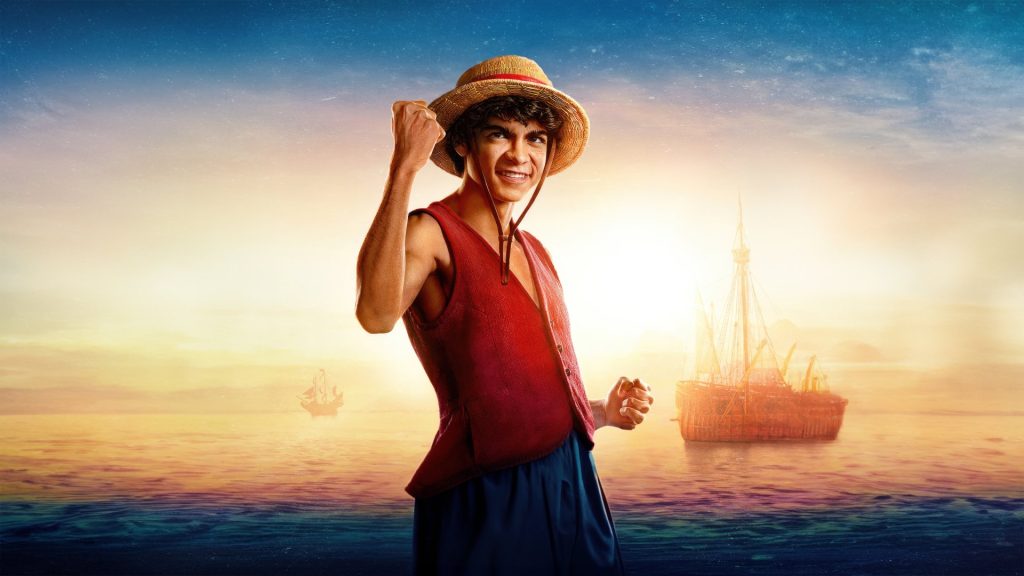
One Piece works in live-action
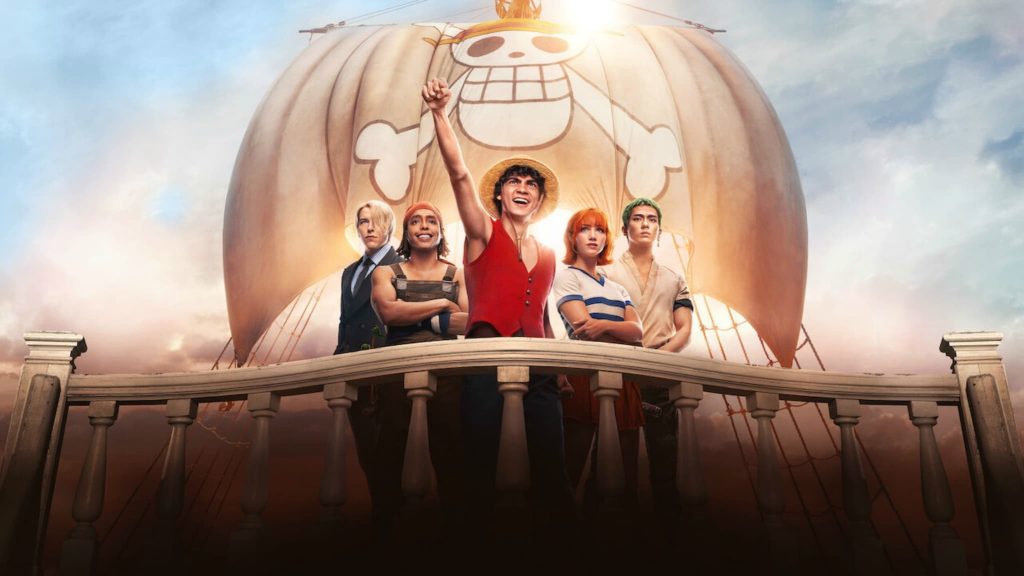
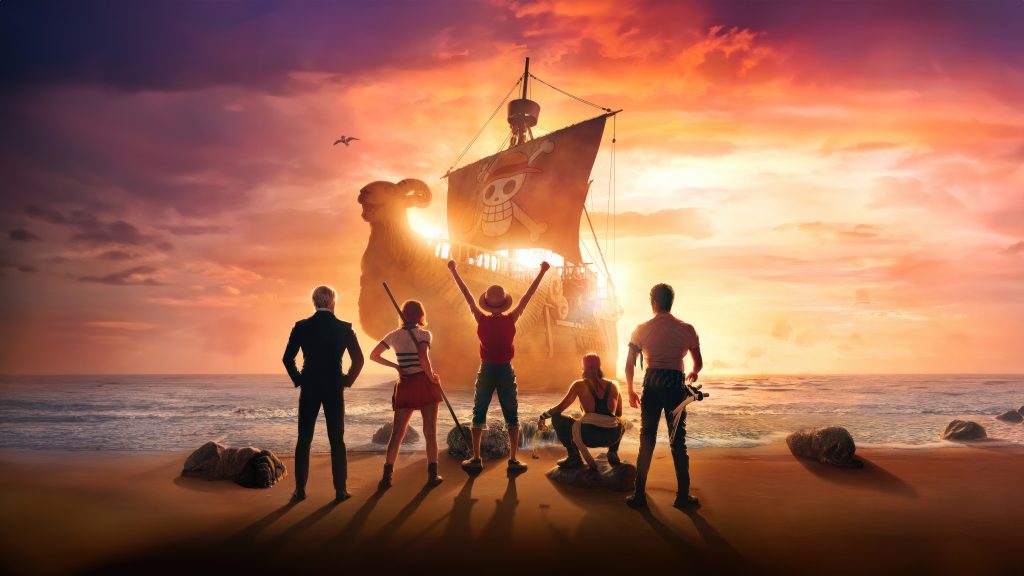
Along came the Straw Hat Pirates. When Netflix launched its massive adaptation of One Piece, it didn’t just break the notorious live-action curse; it shattered the entire Hollywood playbook for handling international intellectual property.
Producing a global hit that resonated deeply with lifelong fans while drawing in tens of millions of newcomers was no happy accident of a massive budget.
Instead, One Piece succeeded precisely because it rejected the modern blockbuster formula, proving that the secret to a great adaptation is an unwavering belief in the soul of the source material.
Arguably, live-action versions of anything animated feels a bit twee or cheesy. One Piece is no exception. However, I think a lot of that gets hidden in Japanese voice acting and subtitles. Hearing some of the dialogue in English always hits quite rough, anyway. This is likely not a fault of live-action adaptations, in their defense.
The Oda Directive
The downfall of almost every failed adaptation begins in the writer’s room, specifically with the assumption that the original material is a childish concept that needs to be “fixed” for the real world.
When Hollywood executives looked at the medium of anime in the past, they saw properties to be stripped for parts rather than stories to be respected.
Creator notes were routinely discarded, most famously evidenced by Akira Toriyama’s public frustration over how his input was ignored during the production of his own franchise’s Western film.
Netflix’s One Piece completely upended this dynamic by establishing what can only be described as a creative dictatorship helmed by the manga’s original author, Eiichiro Oda. Creative independence is so critical.
"We gave Oda-san absolute veto power. If he looked at a scene, a costume, or a visual effect and felt it didn't match the soul of One Piece, we stopped and reshot it."
— Tomorrow Studios Production Insight
This unprecedented arrangement forced the show runners to park their creative egos at the door. They were not trying to improve upon the best-selling comic book series in human history; they were acting as translators.
By granting Oda total veto power, the production ensured that the adaptation’s foundation was built on respect rather than corporate arrogance.
When structural changes to the narrative were made to fit an eight-episode television arc, they were executed with the author’s blessing, maintaining the emotional architecture of the world even when the plot beats shifted.
Embracing the Bizarre and the Power of High Earnestness
Beyond the behind-the-scenes politics, the ultimate triumph of One Piece lies in its tonal execution.
We currently live in an era of media dominated by a writing style deeply insecure about its own fantastical elements. Modern blockbusters constantly utilise self-referential, cynical humour to reassure the audience that the filmmakers are in on the joke.
If a character has a strange superpower or wears a colourful costume, another character will inevitably look at the camera and mutter a sarcastic quip to undercut the potential silliness.
One Piece looks at a giant, sentient snail being used as a rotary telephone and treats it with absolute, unblinking sincerity.
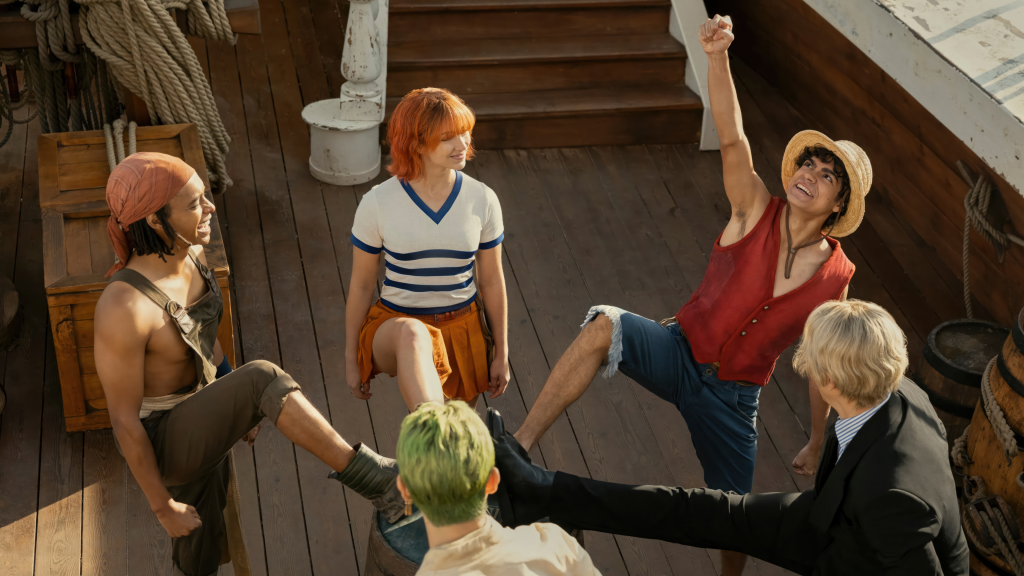
The live-action series embraces what can best be described as unapologetic camp.
It features an antagonist who is a psychotic pirate clown capable of splitting his body into floating pieces, fish-men in Hawaiian shirts enforcing martial law, and a protagonist who fights with a sword clamped between his teeth. In lesser hands, this would collapse into an ironic farce.
Yet, the show succeeds because it pairs its visual absurdity with immense emotional weight. When the characters weep over their tragic pasts, or when Luffy promises to risk his life for a friend, the script never winks at the audience.
It demands that you take this world as seriously as the characters do.
Audiences will willingly suspend their disbelief for almost any level of visual madness, provided the story itself treats its own emotions with dignity. This is key, live-action works because of this.
Practical Grandeur First
In a contemporary television landscape where billion-dollar fantasy shows are routinely filmed inside sterile, grey green screen volume rooms, One Piece chose a refreshingly old-school approach to its world-building.
The live-action production spent a reported eighteen million dollars per episode, a massive chunk of which went toward physical craft.
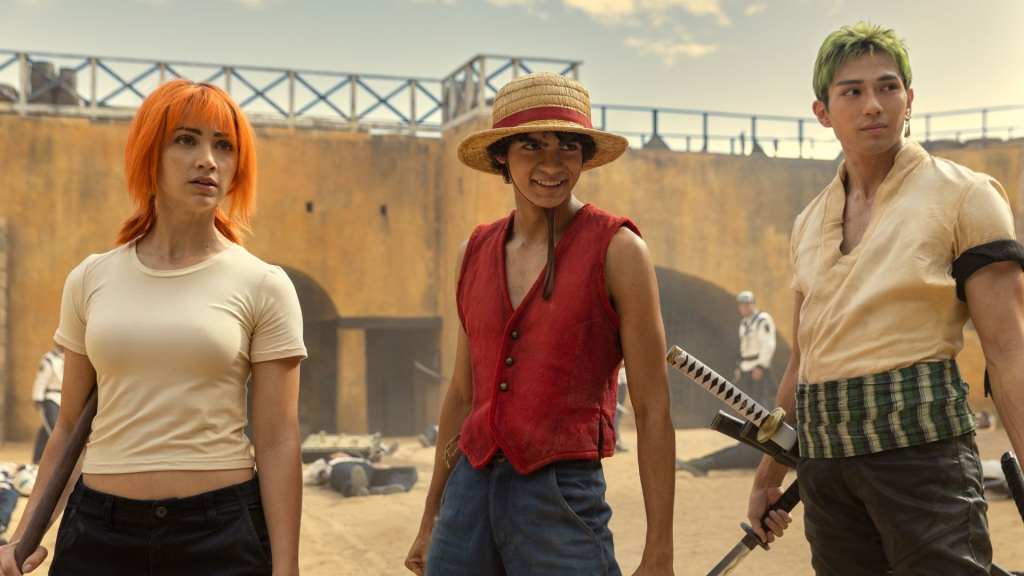
Instead of relying entirely on digital environments, the crew built life-sized, fully sea-worthy pirate ships and massive practical sets on location in South Africa.
This tactile commitment completely changes how the fantasy feels on screen. When Luffy’s rubber limbs stretch or roll across the deck, the visual effects are obviously digital, but the wood he is standing on is real. The sweat on the actors’ faces is real, and the sunlight hitting the water is authentic.
By anchoring the digital absurdity of Luffy’s devil fruit powers within a textured, weathered, and physically lived-in environment, the show avoids the weightless, soulless aesthetic that plagues modern CGI blockbusters.
It perfectly replicates the grand, maritime romance of the early manga arcs by giving the audience a world they feel they could actually step into and touch.
Casting for Soul, Not Star Power
The final piece of the puzzle, and perhaps the highest hurdle the production cleared, was finding the physical manifestations of the Straw Hat crew.
The traditional Hollywood instinct is to hunt for bankable, recognisable A-list talent to anchor a massive financial risk. Instead, the showrunners focused entirely on a casting philosophy that prioritized an actor’s innate alignment with the character over their box-office draw.
This was particularly vital for the character of Monkey D. Luffy. In animation, a protagonist driven by boundless, bulletproof optimism and childish innocence is a staple of the Shonen genre.
In live-action, that exact same personality can very easily cross the line into becoming grating, annoying, or completely unlikable.
Iñaki Godoy’s performance works because his charm feels entirely unforced. He brings a rare, radiant empathy to the screen that anchors the entire ensemble.
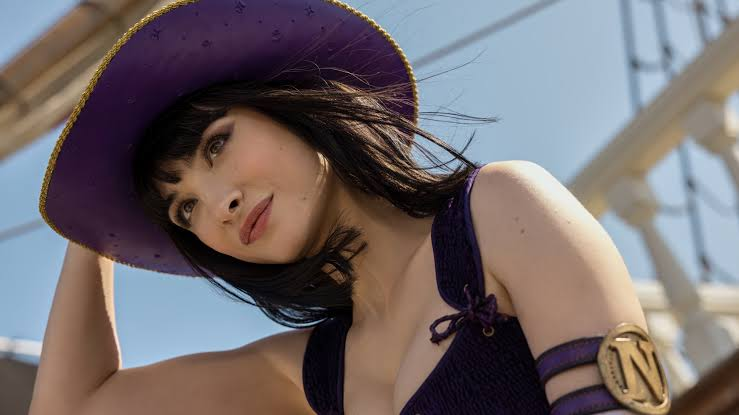
Surrounded by Mackenyu’s stoic, razor-sharp Zoro and Emily Rudd’s fiercely guarded Nami, the cast operates as a genuine found-family dynamic.
The chemistry between these relatively unknown actors forms the emotional engine of the series, ensuring that even when the plot ventures into its strangest territories, the human core of the story remains completely unshakeable.
A New Blueprint for the Art of live-action
The historic success of One Piece has provided the entertainment industry with a vital piece of clarity. The systemic failure of the live-action anime adaptation genre was never a failure of the medium itself.
It was a symptom of Hollywood’s deep insecurity when handling it. For decades, studios assumed that anime had to be domesticated and stripped of its unique cultural identity to appeal to the West.
By fiercely protecting the author’s vision, leaning into earnest camp, investing in physical production, and casting for character soul over celebrity status, the creators of this series did more than just break a curse.
They established a definitive new blueprint for how the West must treat global storytelling moving forward, proving that the ultimate treasure of any adaptation is simply having the courage to believe in the magic of the original.
Any more?
The question is, is there more to it or have we covered all bases here? It might very well be that One Piece is an anomaly, but it certainly feels like if others follow in the trail that’s been blazed, that would be a route to success, to a degree.
These things are made-up of so many moving parts, we could have easily missed some key elements.
What do you think makes One Piece a truly successful live-action adaptation?