






Ghost of Yotei had a tough act to follow, in many ways. A game we’ve been thinking about a lot, again, recently. Especially seeing Wolverine falter for another big Sony studio. Is this the last, brilliant PlayStation exclusive?
When Ghost of Tsushima arrived in the twilight months of the PlayStation 4 generation, Sucker Punch Productions managed to wring every last drop of performance from the console, delivering a gorgeous, samurai-cinema sandbox.
Yet for all its striking beauty, Jin Sakai’s journey suffered from a specific structural friction.
Jin was a protagonist bound by his upbringing, torn between traditional samurai honour and the pragmatic cruelty required to save his home. That moral quandary anchored the narrative, but it also resulted in pacing stumbles, particularly throughout a rigid second act.
Ghost of Yotei steps into the light with no such baggage.
Set in the wild, untamed wilderness of Ezo (the northern expanse known today as Hokkaido) this spiritual successor replaces honour bound by tradition with something far more primal: revenge.
In stepping away from Jin’s rigid code and embracing a protagonist who does not care how her enemies die so long as they bleed, Sucker Punch has delivered an open-world action title that feels more organic, visually arresting, and brutally refined than its predecessor.
Somehow overlooked by other games last year, Ghost of Yotei is one of the best of 2025 without a doubt. We wanted to get our thoughts up on here, and re-share the joy.
Vengeance
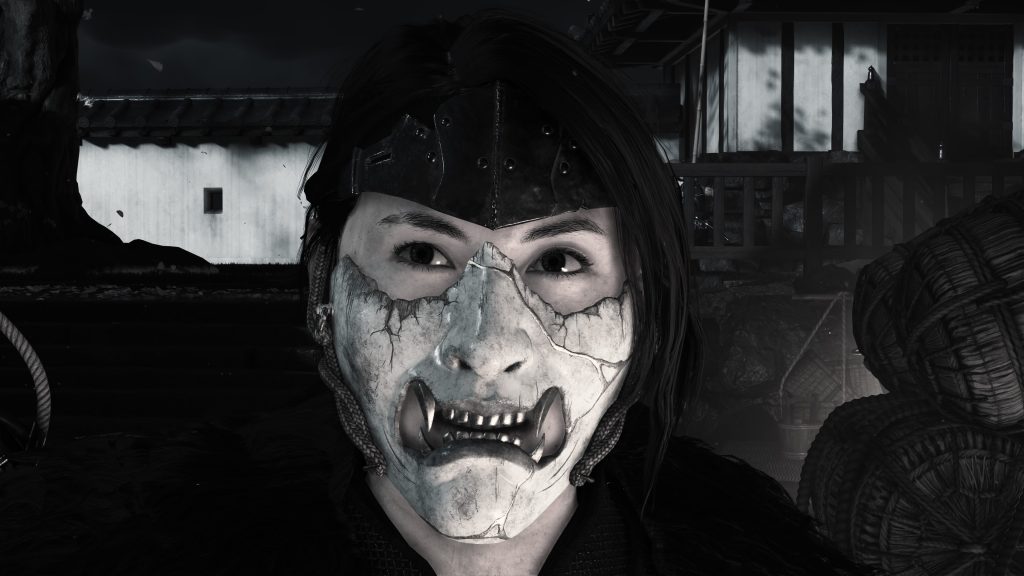
The narrative foundation of Ghost of Yotei is built around Atsu, a fearsome wanderer known across Ezo as the Onryō. A vengeful ghost.
Sixteen years prior to the game’s events, Atsu’s family was slaughtered by a ruthless cabal of warlords known as the Yotei 6.
Left for dead and pinned to a tree with a blade, she survived against all odds. Now, wielding the very weapon meant to end her life, she sets out to hunt down those six figures across a harsh, wintery frontier.
What makes this quest work so effectively is how Sucker Punch weaves history and personal context directly into the world.
The basic “they wronged me, so I will kill them” framework could easily have fallen flat, but Atsu’s reflection and her interactions with others elevate the narrative above a standard blood-feud checklist.
Ghost of Yotei allows you to revisit Atsu’s childhood home at the touch of a button, shifting the screen back to a time before everything turned to ash. Experiencing those memories first-hand, creates an emotional anchor that makes her rage feel earned.
Add to that, the supporting cast, which consists of far more than static village vendors waiting to hand out fetch quests.
They lend texture to the wilderness, providing history to Ezo and challenging Atsu’s worldview as her legend grows.
As news of the Onryō spreads, hand-drawn bounty posters begin appearing in settlements, becoming increasingly accurate as her body count rises.
Ronin wander the wilds specifically to claim the price on your head, while unexpected allies pull up to your campfire to share a meal and a story.
Ghost of Yotei feels legitimately alive, turning the world into a reactive space where your actions echo through every valley.
Beyond Stances
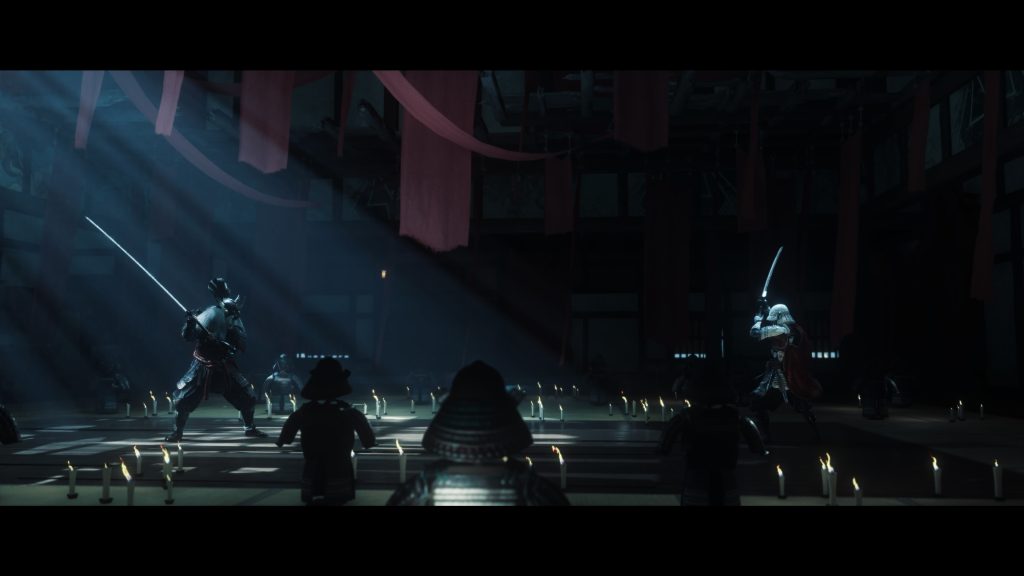
The most substantial mechanical leap forward lies in the overhaul of combat. Ghost of Tsushima relied heavily on stance-switching. Matching a specific sword stance to a specific enemy type.
Ghost of Yotei completely retires that system in favour of a fluid, multi-weapon wheel that acts as a high-stakes game of rock-paper-scissors.
Atsu carries an arsenal that grows alongside her legend in Ghost of Yotei:
Dual Katanas: Lightning-fast blades ideal for overwhelming spearmen with relentless slicing combinations.
The Yari (Spear): A long-reach weapon designed for crowd control. It features a devastating “rushing impale” to close distances instantly and a vaulting kick capable of sending bandits tumbling off cliff edges.
The Kusarigama: A chain-and-sickle weapon that allows you to hook enemies from afar, yank them off balance, or ignite the chain to sweep fire across multiple foes.
Ranged & Consumable Options: Firearms make their debut alongside traditional bows. Long-range rifles offer single-shot kills balanced by a lengthy reload time, while throwable blades, smoke bombs, and kunai allow for rapid mid-fight adaptation.
Crucially, you are forced to engage with your entire arsenal. Certain weapons are simply more effective against specific enemy gear. So you’re encouraged to upgrade every tool rather than leaning on a single blade. Ghost of Yotei has you thinking on your feet in every encounter.
The brilliance of this system is how Sucker Punch ties weapon acquisition directly into narrative progression. Weapons are not simply looted from chest drops; they are earned through dedicated training sessions with weapon masters scattered across Ezo.
These side quests feel naturally woven into the journey. When learning the Yari, you are tasked with catching jumping fish out of a fast-flowing river to master timing and reach.
When acquiring dual katanas, the game physically demonstrates the difficulty of cutting bamboo with your non-dominant hand, naturally smoothing out the animations and timing as Atsu’s proficiency grows.
Progression feels like genuine character development rather than an arbitrary skill-tree dump. We’ve never seen something so seemingly standard in an open-world game, feel so unique and modern. Ghost of Yotei raises the bar for the open-world genre in so many ways.
Visuals and World Design
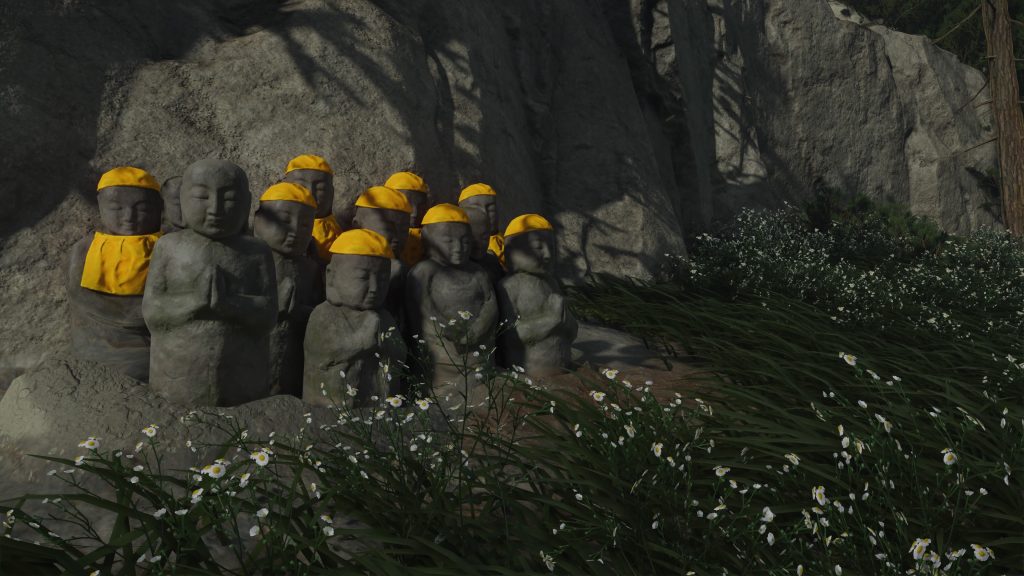
Visually, Ghost of Yotei is a remarkable showcase for modern hardware. Where Tsushima squeezed every drop of juice out of legacy tech, Yotei takes advantage of current-gen architecture to construct a living wilderness.
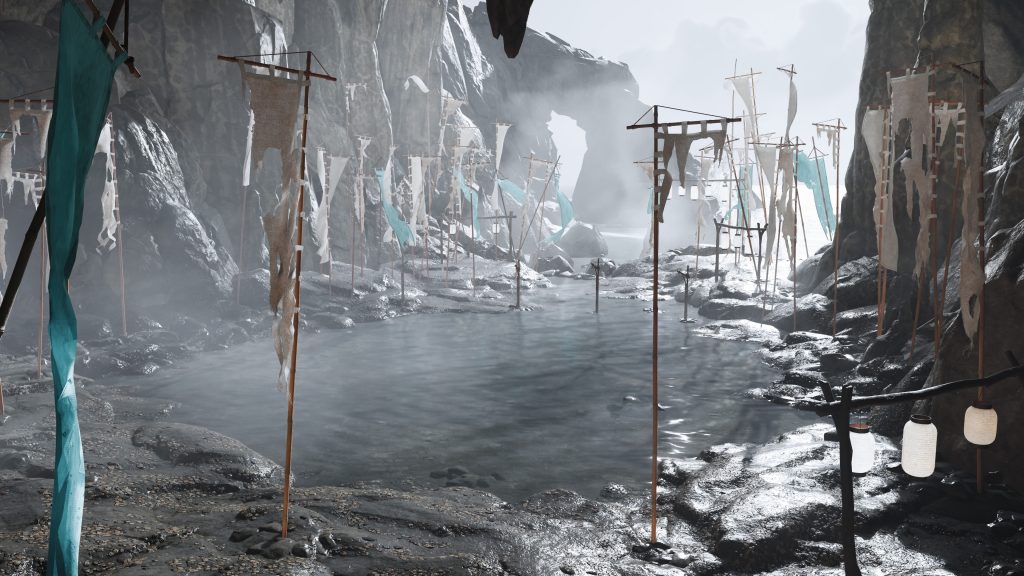
The landscape feels alive in a way few open worlds achieve. Wind rustles through deep reed beds, river currents swirl naturally around riverbanks, and sudden snowstorms sweep down from the slopes of Mount Yotei.
Moments of violence are balanced by serene quiet. Stopping at a natural hot spring while the sun dips below the horizon, deer wandering past without a care.
Exploration has also been unburdened by traditional open-world bloat. Rather than plastering the map with endless checklist markers, Yotei relies on organic discovery.
You are encouraged to pull out a spyglass from high vantage points, spot distant smoke or unusual landmarks, and simply ride out to investigate.
Fast traversal is aided by flowing streams of wind-borne petals that boost movement across open plains, keeping momentum high without breaking the spell of the landscape.
Add to this an expanded customization suite, allowing you to lean into either a noble samurai look or a hooded ninja aesthetic, and a fully featured Photo Mode that lets you control lighting and time of day, and you have a world that demands to be paused and admired.
Overall
Ghost of Yotei succeeds because it understands the strengths of its foundation while ruthlessly trimming the fat.
By replacing Jin Sakai’s rigid internal conflict with Atsu’s focused quest for vengeance, Sucker Punch has crafted a story that feels leaner, faster, and far more personal. In a world that feels alive and changing in response to your every move.
Combined with a weapon system that rewards mechanical variety and an open world that trusts the player to explore without a constant trail of breadcrumbs. Ghost of Yotei isn’t just a worthy successor, it is a triumphant refinement of the open-world action genre.
The best game released in 2025, and one we go back to to keep mopping-up all the good stuff, too.
DAM that’s excellent.
