






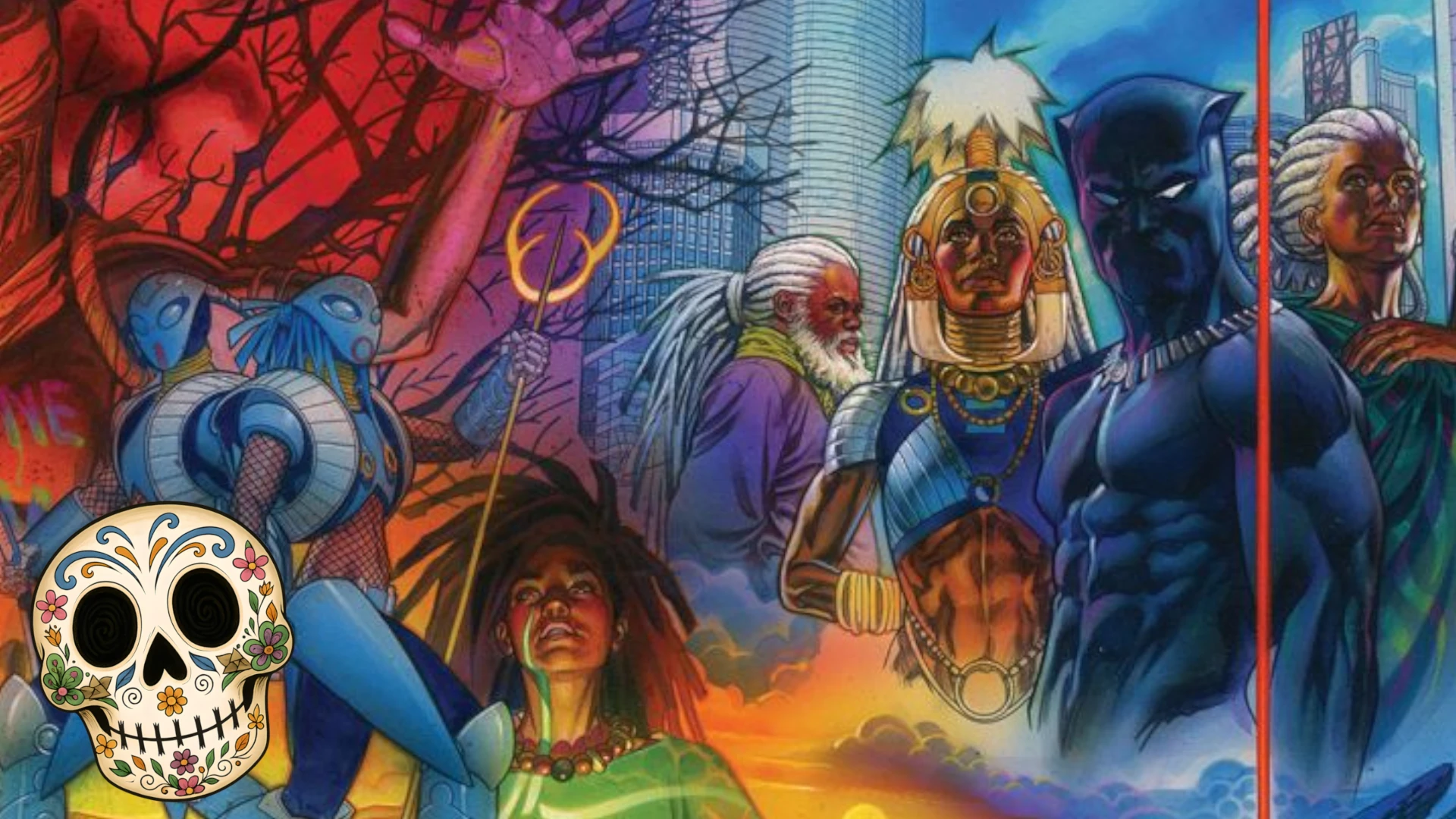
To my great shame, my Black Panther exposure over the years has been limited. Worse yet, the most of my knowledge of T’Challa, Shuri and Wakanda comes from the MCU and Marvel SNAP!.
With the addition of comic books and graphic novels to our content here. I thought it best to right that wrong, and dive in.
What I didn’t expect with A Nation Under Our Feet was a deep, rich, and serious Black Panther. Political chaos, a monarchy unable to effectively rule, and a war brewing.
It’s completely shifted my perspective of what Black Panther actually is. Sure, there’s combat, super technology and a long history to adhere to. But this is something else.
Black Panther
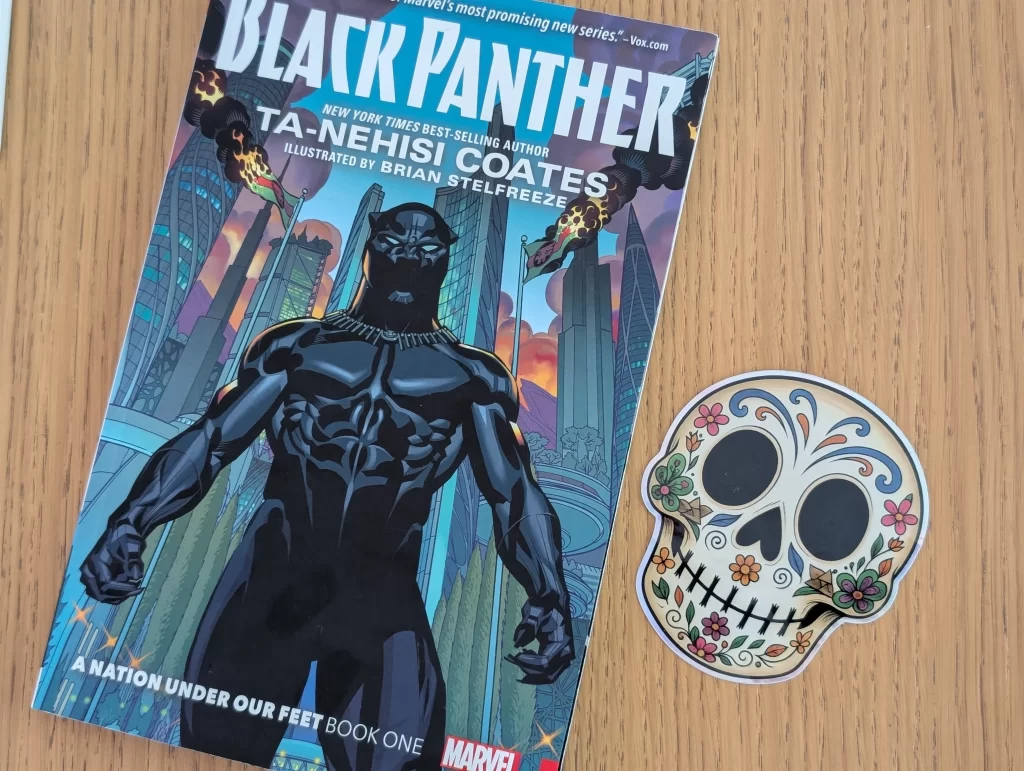
Written by Ta-Nehisi Coates, it’s an academic and analytical foray into Marvel’s flagship African utopia. Alongside the kinetic lines of artist Brian Stelfreeze, it marks a structural shift for Wakanda.
Published as Black Panther: A Nation Under Our Feet, Book One, this volume abandons the traditional superheroic power fantasy to construct something altogether more fragile: a political procedural disguised as a comic book.
Coates treats Wakanda not as an unassailable bastion of Afro-futurism, but as a real nation buckling under the weight of its own exceptionalism.
Following devastating floods and internal destabilisation in previous Marvel continuity, T’Challa finds his absolute monarchy under existential threat. The Black Panther, no longer a symbol of rule and stability.
A terrorist faction known as the People, led by the counter-revolutionary Zenzi, triggers asymmetric uprisings across the country by manipulating the raw emotion and deep-seated trauma of it’s people.
Wobbly Monarchy
What makes this narrative compelling is Coates’s refusal to position T’Challa as an uncomplicated saviour.
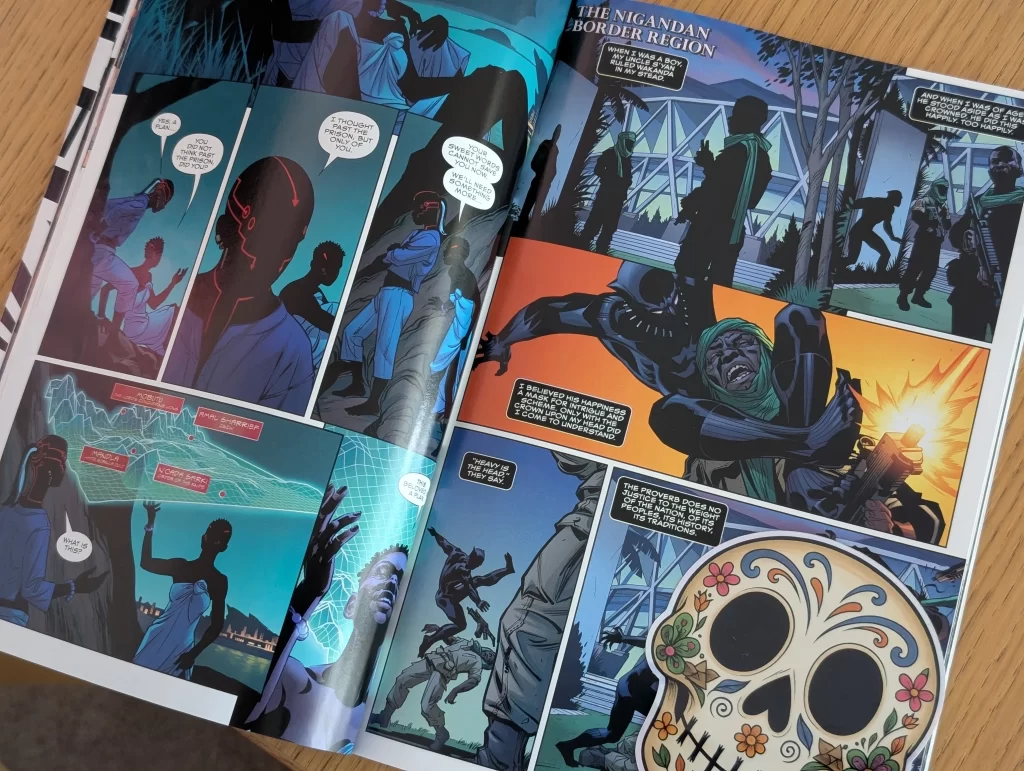
Instead, the Black Panther is heavily scrutinised as an autocrat. He is a king who loves his people, yet he realises he may be an anachronism in a world demanding self-determination.
The story operates with a deliberate, somber pace, trading explosive punch-ups for philosophical arguments on the legitimacy of absolute rule and the heavy cost of state security.
This internal fracturing is paralleled by the sub-plot of Ayo and Aneka. Two renegade members of the Dora Milaje, the King’s elite, all-female personal bodyguard.
Disillusioned by a crown that fails to protect its women from local tyrants, they steal prototype tactical armour (that looks wicked!) to become the Midnight Angels. Local vigilantes acting as an independent judge and jury.
Their thread provides a visceral, grassroots counter to T’Challa’s top-down crisis management.
I never expected Black Panther to be so deep and analytical.
Aesthetic
Serious, brooding, dialogue-heavy, yes. But this is still a Marvel comic, so there’s the suspended-disbelief in play. Serving-up near-future, fantastical worlds is a requirement. Black Panther: A Nation Under Our Feet is no slouch here, either.
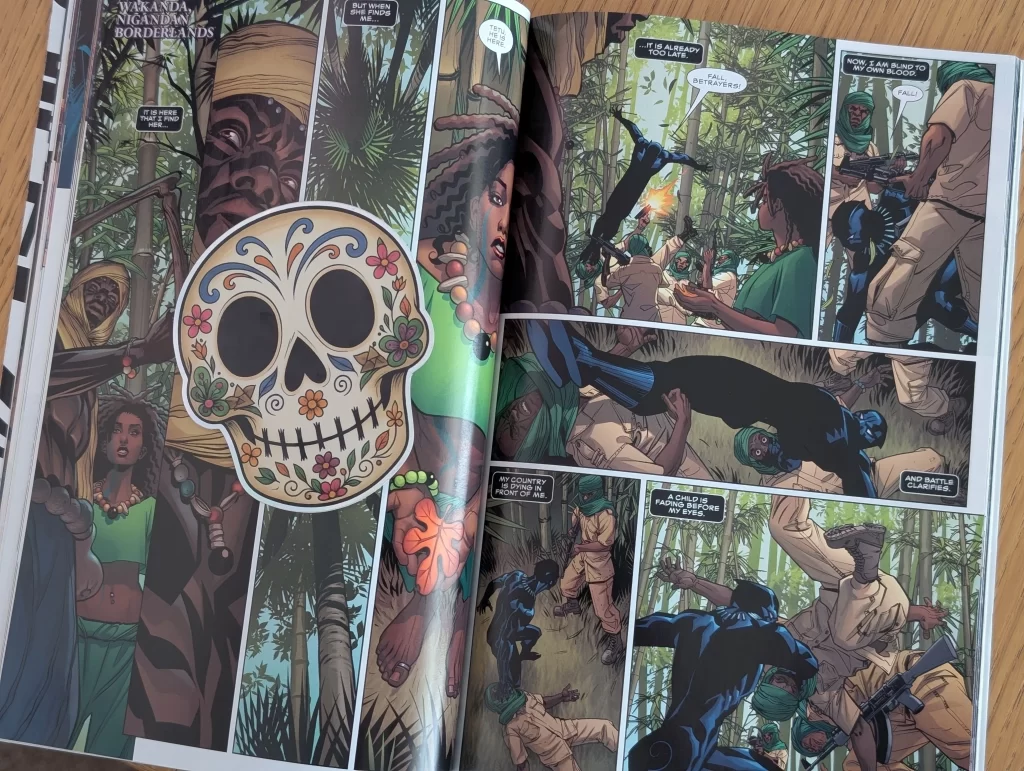
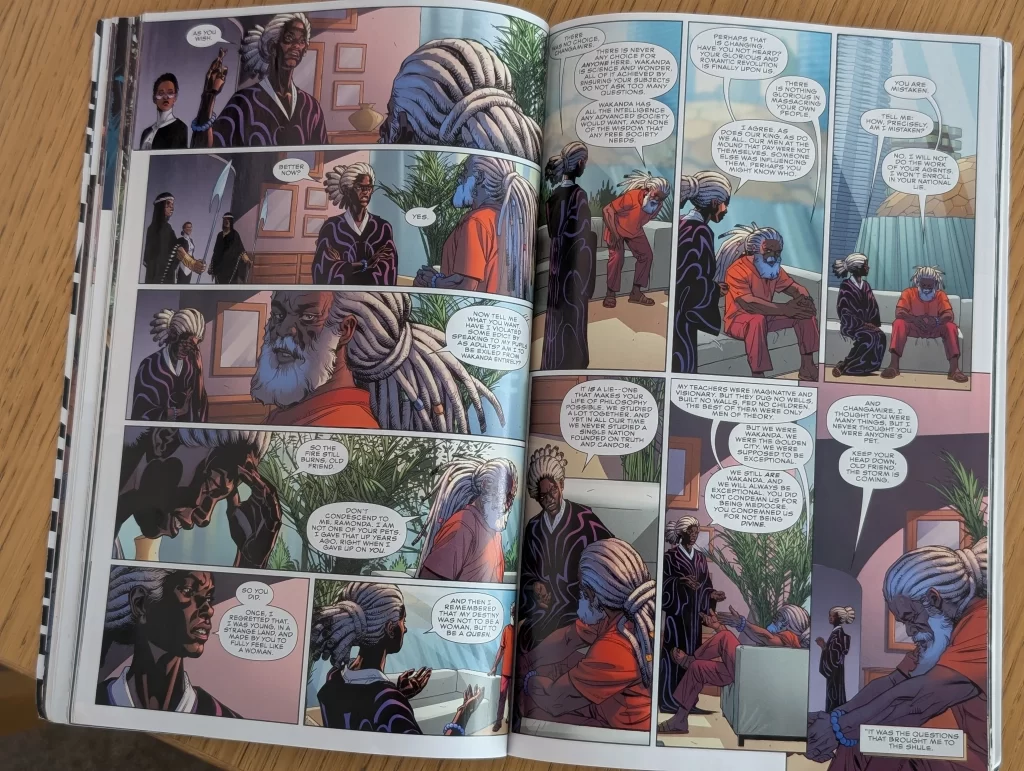
Brian Stelfreeze’s artwork is the glue that prevents this dialogue-heavy narrative from stalling. Rather than relying on generic, over-rendered superhero aesthetics, he employs clean, deliberate linework and minimalist layout designs to emphasise character expression and geography.
Combined with Laura Martin’s colouring palette masterfully distinguishes between the sleek, laboratory blues of T’Challa’s royal quarters and the raw, earthy tones of the rebellious provinces, ensuring that the geopolitical stakes feel visually distinct.
“A king must be a living, breathing symbol of his people’s triumphs, but what happens when he becomes the primary lightning rod for their collective grief?”
The movement is flawless, the world, beautifully realised. Yet the mood and tones are perfectly set to match the dialogue and the action. This is absolutely stellar work. I’d come back just to look at the art work.
Overall
if you’re looking for standard comic-book escapism, A Nation Under Our Feet may prove a frustrating experience.
The pacing is intentionally slow, the prose heavily literary, and the traditional action beats are sparse.
However, as a dissection of power, legacy, and systemic revolution, it stands as a remarkably mature piece of graphic fiction.
It forces the reader to contemplate whether Wakanda can truly survive its own mythology.
A Nation Under Our Feet isn’t the Black Panther I was anticipating. But Book Two is in my shopping basket, along with Book Three, so we can see how this arc plays-out.
We’ll look at other iterations of Black Panther in the future, but this, whilst unusual, is a great start. No idea how it’ll go, but we’ll of course keep it independent, honest and as clear as we can. For now, this is an easy recommend.